If you've been living with dentures for a while, or you're weighing your options after significant tooth loss, you've probably heard more about full-arch restoration lately. Patients ask me about this often, and I always appreciate the question — because it means someone is thinking carefully about their long-term health, not just a quick fix.
Let me walk you through what the differences actually mean for your daily life.
What Is Full-Arch Restoration?
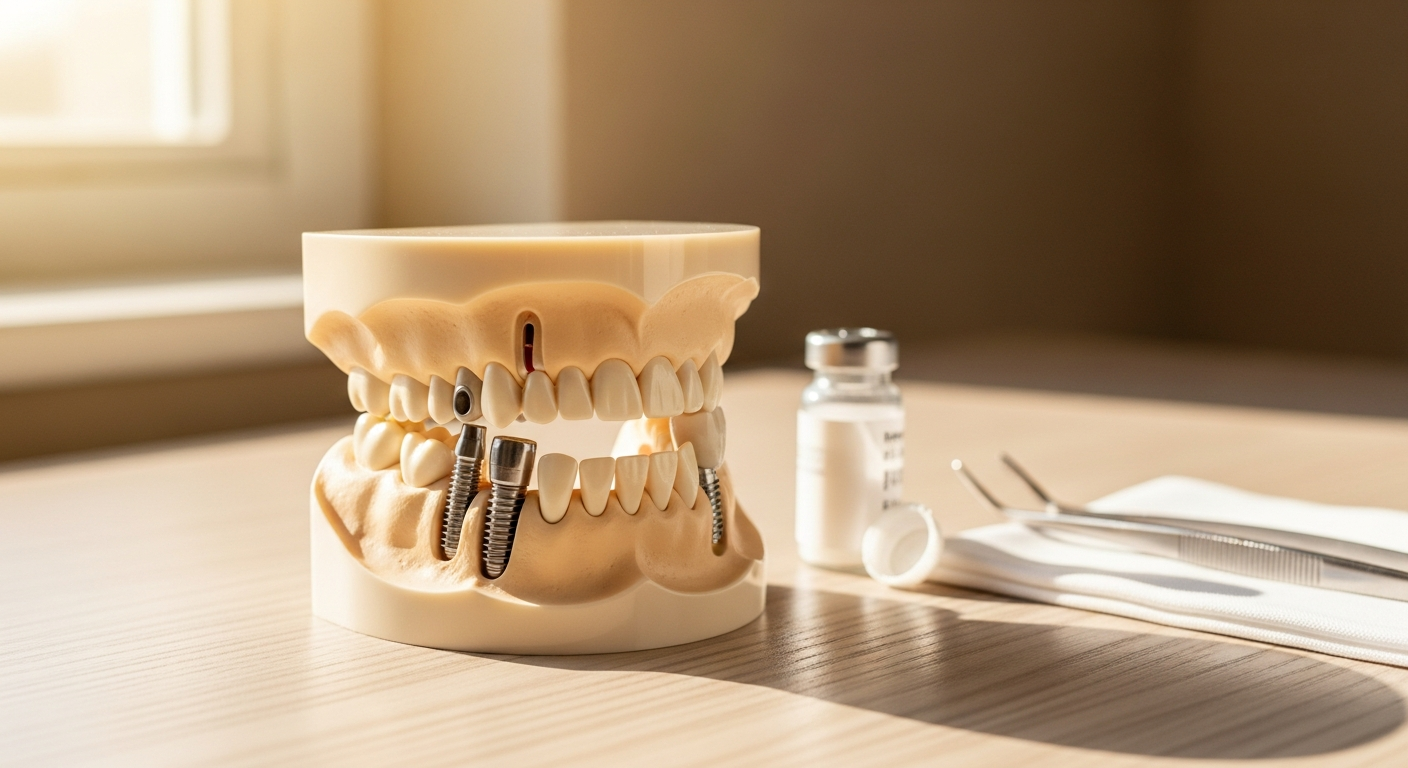
Full-arch restoration replaces every tooth on the upper jaw, the lower jaw, or both. Most of the time, it's built on dental implants — small posts placed into the jawbone that act like tooth roots. Over time, those posts fuse with the bone, creating a stable base for the teeth that go on top.
There are two main paths:
- Fixed implant-supported restorations — these are attached to the implants and can only be removed by a dentist. Many patients say they feel closest to natural teeth.
- Removable implant-supported overdentures — these snap onto the implants and can be taken out for cleaning. They offer much more stability than traditional dentures, while keeping daily care straightforward.
Which option fits you depends on things like your bone density, your overall health, and what feels right for your lifestyle. That's a conversation we'd have together, step by step.
The Honest Story About Traditional Dentures
Dentures have helped many people for generations, and I want to be clear: they're a legitimate option. But there are some drawbacks that patients often tell me they wish they'd known earlier.
They Can't Stop Bone Loss
When teeth are missing, the jawbone loses the stimulation it used to get from tooth roots. Without that signal, the bone gradually shrinks — a process called bone resorption. Over time, this can change the shape of your face and affect how dentures fit. Traditional dentures rest on the gums, so they can't do anything to slow that process.
Fit Changes Over Time
As the jawbone shifts, dentures may need relining or replacing to stay comfortable. Most need to be replaced every five to ten years, and the costs of adjustments, repairs, and replacements can add up more than people expect.
Function Has Real Limits
Traditional dentures restore only a fraction of natural chewing ability. That matters when you're trying to eat a full, varied diet. Some patients also find that certain sounds become harder to pronounce, and the worry about slipping or shifting can weigh on confidence in social situations.
Ready to get started? Schedule a visit with Advanced Dental Care of Stafford.
Why Many Patients Are Choosing Full-Arch Restoration
Chewing and Speaking Feel More Natural
Implant-supported restorations restore significantly more chewing function than traditional dentures for many patients. That's a meaningful difference for everyday eating, and because the restoration is anchored in bone, there's no movement during meals or conversation.
Bone Is Preserved Over Time
This is one of the most significant long-term benefits. Implants stimulate the jawbone the way natural tooth roots do, which can help preserve both bone density and facial structure. For many patients, this is what tips the decision.
Long-Lasting with Proper Care
With regular care, implant-supported full-arch restorations can last for decades. The long-term durability of this approach is well-supported by research, and individual results depend on your health, care habits, and clinical factors.
The Cost Sits in Different Places
The upfront cost of full-arch restoration is higher than traditional dentures. That's real, and I never want to minimize it. What's easy to miss is the other half of the comparison: dentures need relines, repairs, and replacement as the jaw changes shape, so that spending is spread out over years rather than absent. Which of the two comes out ahead for you depends on your own mouth, and neither number can be quoted before an exam. After yours, you get the recommendation written down with the numbers on it, and nothing is scheduled until you've read it.
If you'd like to learn more about how this works, our All-on-4 and full-arch restoration page has more detail on the process and what to expect.
What Research Generally Supports
A growing body of clinical research supports what many patients experience firsthand: implant-supported restorations produce meaningful improvements in quality of life for people who have lost most or all of their teeth. Results are broadly consistent across both fixed and removable implant options.
Research also supports the clinical soundness of the All-on-4 protocol — using four implants to support a fixed arch. Modern digital planning tools, including 3D imaging and digital workflows, allow for precise implant placement planning, which supports predictable outcomes.
FAQ
Q: Am I a candidate for full-arch restoration if I've had dentures for many years?
Many long-term denture wearers are good candidates, though bone loss that has occurred over time may affect options or require additional steps like bone grafting. A full exam and 3D imaging help us understand exactly where things stand for you personally.
Q: How long does the process take?
Treatment timelines vary based on individual needs and clinical factors. Some patients receive a fixed provisional restoration the same day as implant placement. Others go through a staged process. We'd walk through what's realistic for your specific situation together.
Q: Will I be without teeth at any point during treatment?
In most cases, we work to make sure you have something functional in place throughout treatment. The goal is always to keep you comfortable and confident during the process.
Q: Is full-arch restoration covered by dental insurance?
Coverage varies widely by plan, and some components may be partially covered while others aren't. We verify your benefits directly with your plan rather than guessing from the card, so what your insurance is expected to pay is already applied on the written plan you read after the exam. If the total is more than you want to take on at once, say so while we're going through it — most treatment can be phased, with whatever is causing trouble handled first.
Living with tooth loss is something a lot of people manage quietly for a long time. If you've been curious about what's changed, or just want to understand your options without any pressure, we're here to help. You're in control of your decisions — we're just here to make sure you have the information you need to make the right one for you.
Have questions? Call us at (540) 288-2800.
See also:
More from Our Blog

Oil Pulling: Does Swishing Coconut Oil Actually Clean Your Teeth?
Short trials of oil pulling for teeth found lower plaque and gum scores over a few weeks, on very weak evidence. It cannot remove tartar, fill a cavity or treat gum disease, and the real risk is letting it replace brushing.
Read more
How Much Do Clear Aligners Cost? What Moves the Price
An aligner quote is a sum of parts: how far your teeth move, how many trays and refinements that takes, the records, the retainers, and what your plan pays. Here is what each part does.
Read more
It Has Been Years Since Your Last Dental Visit
If fear is what kept you away, that is the most useful thing you can tell us when you book. It changes the appointment, and there are real options beyond being told to relax.
Read more