Sleep Apnea and Your Dentist: How Airway-Focused Care Can Help
A lot of people are surprised to hear that their dentist can play a role in sleep apnea care. It makes sense to be curious about that. When you come in for a routine visit, we're looking at a lot more than just your teeth — and sometimes, what we notice can point to something that's been quietly affecting your sleep, your energy, and your overall health.
Let me walk you through what airway-focused dental care actually means, and why it might matter for you.
What Sleep Apnea Is (and Why It Often Goes Unnoticed)
Obstructive sleep apnea happens when the soft tissues in the throat relax during sleep and partially or fully block the airway. Breathing stops and starts repeatedly through the night, often without the person ever knowing it's happening. An estimated 54 million adults in the United States have some degree of sleep apnea, and many of them haven't been diagnosed.
The signs people notice — if they notice anything at all — are usually things like feeling tired no matter how much sleep they get, waking up with headaches, or being told by a partner that they snore. These symptoms can be easy to dismiss. Life gets busy, and fatigue starts to feel normal after a while.
What makes this worth paying attention to is that untreated sleep apnea has been linked to real health consequences. Research connects it to increased risk of cardiovascular disease, high blood pressure, and poor blood sugar control in people with Type 2 diabetes. It can also affect mood, memory, and the ability to concentrate. These aren't minor inconveniences — they're reasons to take sleep health seriously.
What Your Dentist Can See
During a routine dental exam, we're in a position to notice certain signs that may suggest a patient could benefit from a sleep evaluation. This isn't something most people expect from a dental visit, but it's a natural part of looking at the whole picture of your oral health.
Some of the things we may observe include:
- Worn teeth or clenching patterns — grinding during sleep is often associated with sleep apnea
- Dry mouth or changes in the soft tissues — repeated mouth breathing through the night can leave clear signs
- Jaw discomfort or TMJ symptoms — the jaw muscles can become strained when the body is working to keep the airway open
- Anatomy of the palate and throat — a high arched palate or enlarged tonsils can contribute to airway narrowing
None of these findings on their own confirm a diagnosis. What they do is give us a reason to ask more questions and, when it seems appropriate, refer you to a sleep physician for a proper evaluation. We're not diagnosing sleep apnea — that's the physician's role. We're helping make sure it doesn't go unnoticed.
Ready to get started? Schedule a visit with Advanced Dental Care of Stafford.
How a Dentist Can Help With Treatment
If a sleep physician has diagnosed you with obstructive sleep apnea, or if you've tried CPAP therapy and found it difficult to tolerate, oral appliance therapy is worth knowing about. It's recognized by both the American Academy of Sleep Medicine and the American Academy of Dental Sleep Medicine as an effective option for adults with sleep apnea.
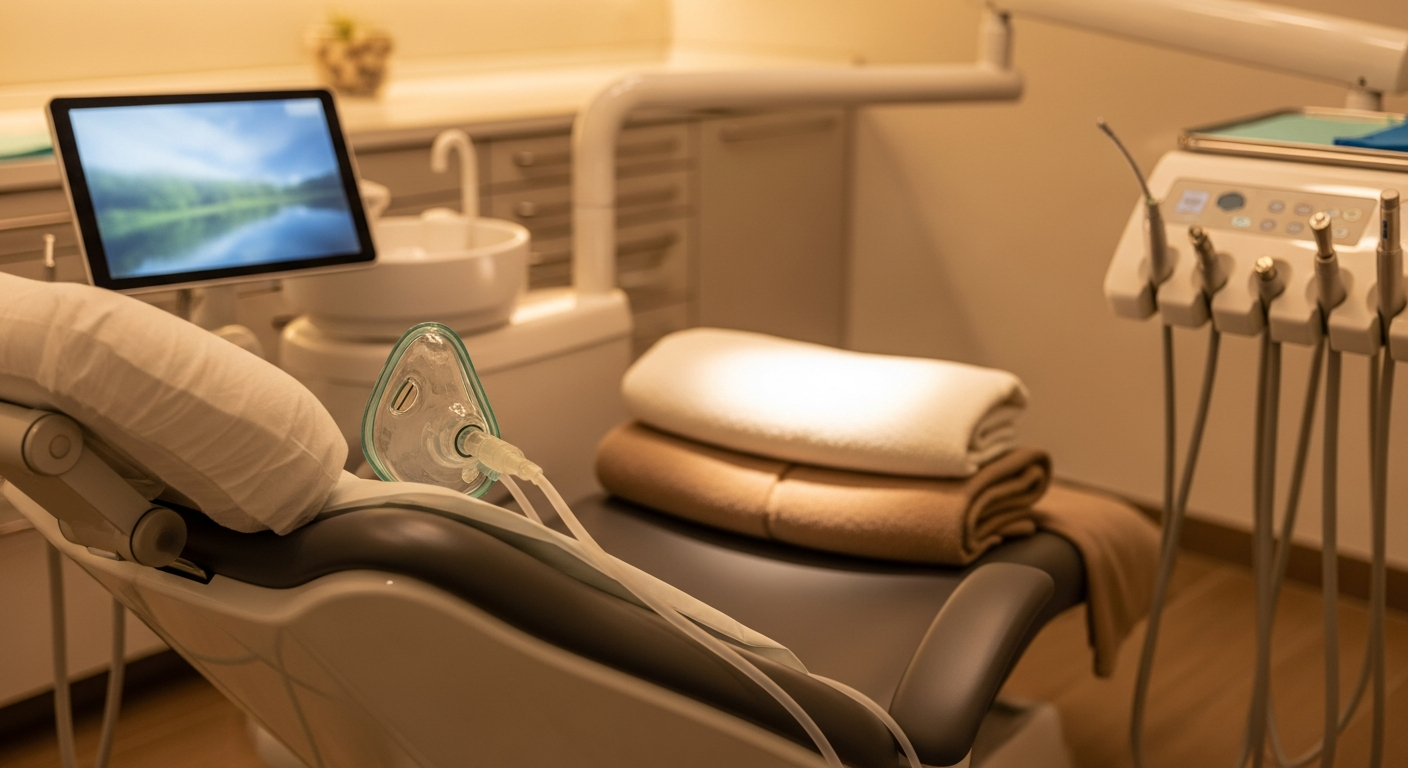
An oral appliance fits over the teeth similarly to a retainer. It's worn during sleep and works by gently positioning the lower jaw slightly forward, which helps keep the airway open. Custom-made, titratable devices — ones that can be adjusted over time — are the standard of care. A one-size-fits-all device from a pharmacy isn't the same thing.
Treatment timelines vary based on individual needs and clinical factors. We work closely with your sleep physician to make sure the appliance is doing what it should, and we monitor for any dental changes over time. It's a collaborative process, and you're part of the decision every step of the way.
What to Expect If You Bring This Up at a Visit
If you've been experiencing symptoms that sound familiar — heavy snoring, daytime fatigue, waking up unrefreshed — please mention it. There's nothing unusual about raising it at a dental appointment. We'll ask a few questions, take a look at what's going on in your mouth, and talk through next steps together.
We can also use tools like cone beam CT imaging, which gives us a detailed, three-dimensional look at the jaw and airway structures, to better understand what we're seeing. This kind of information helps guide whether a referral makes sense and what options may be available to you.
You're in control of how this goes. We'll share what we observe, walk you through your options, and let you decide what feels right. There's no pressure — just information, and a team that wants you to feel better and sleep better.
Frequently Asked Questions
Can a dentist diagnose sleep apnea? No — only a physician can diagnose sleep apnea, typically after a sleep study. What a dentist can do is recognize possible signs during a routine visit and refer you to the right specialist. If you're already diagnosed, we can work alongside your physician to provide treatment.
Is oral appliance therapy right for everyone with sleep apnea? Oral appliance therapy is often a good option for people with mild to moderate sleep apnea, and for those who can't tolerate CPAP. Whether it's the right fit for you depends on your specific diagnosis and overall health. Your sleep physician and dentist can help you think through the options together.
What if I've had sleep apnea symptoms for a long time? It's never too late to look into it. Many people live with these symptoms for years without knowing there's something that can help. Whenever you're ready to bring it up, we're glad to be part of that conversation — no judgment, just support.
Will my insurance cover oral appliance therapy? Coverage varies widely depending on your medical and dental insurance. Investment varies based on individual treatment plans, and we're happy to discuss options during your consultation to help you understand what might apply to your situation.
If you have questions about sleep apnea, oral appliances, or anything you've noticed about your own sleep, we're here to help. You can bring it up at your next visit, or reach out anytime — we'll take it step by step, together.
Have questions? Call us at (540) 288-2800.
See also:
More from Our Blog
Dental Implant Cost in Stafford VA 2026 | Advanced Dental Care
Wondering what dental implants cost in Stafford, VA? Dr. Abdoun breaks down 2026 pricing, what affects your total, and what to expect at your consultation.
Read more
Gum Disease Treatment in Stafford VA | Advanced Dental Care
Bleeding or swollen gums? Learn how gum disease treatment works in Stafford, VA, from early gingivitis to periodontitis — gentle, step-by-step care.
Read more
Tooth Extraction in Stafford VA | Advanced Dental Care
Wondering if you need a tooth extraction in Stafford VA? Learn when it's needed, what the visit feels like, and how to heal comfortably.
Read more