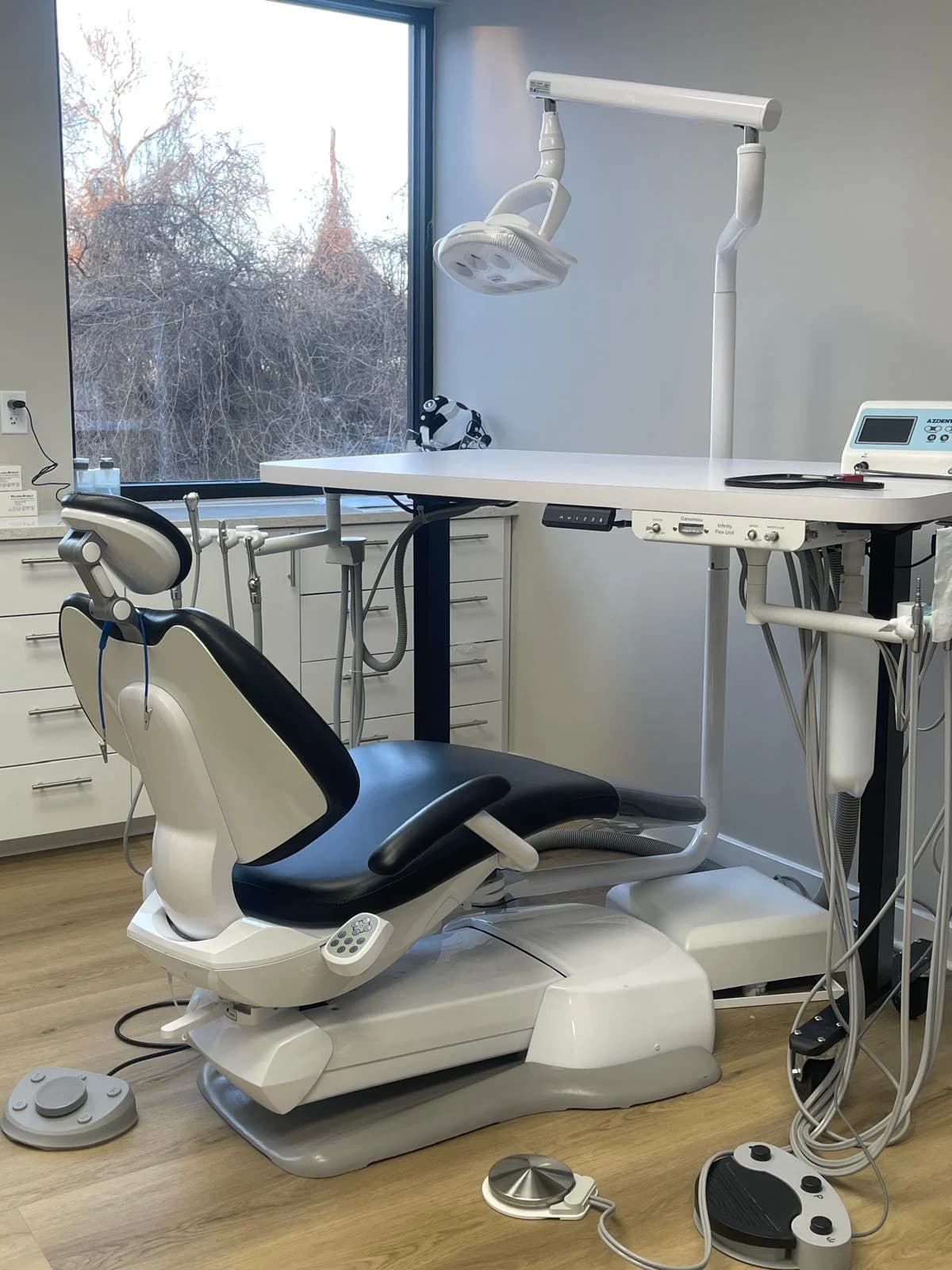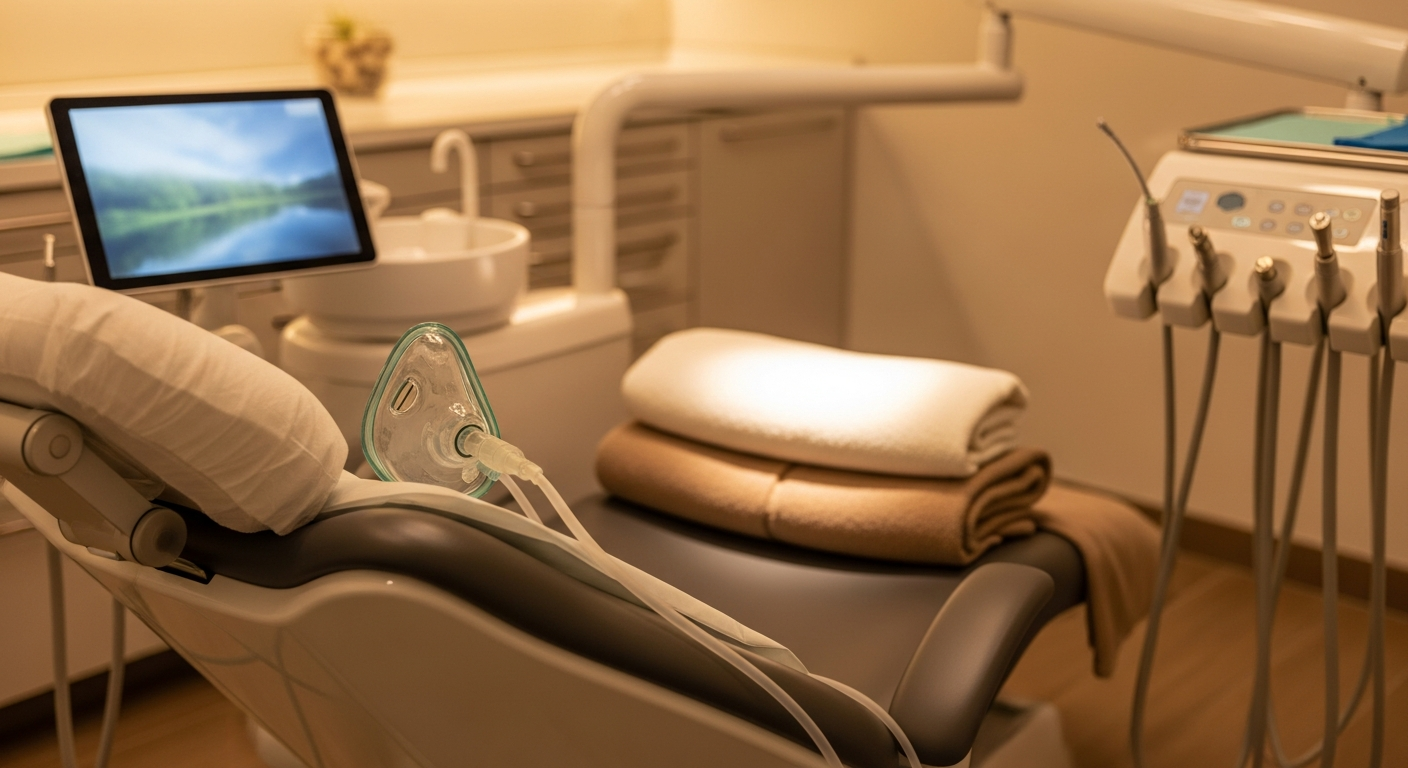
A lot of people don't realize that their dentist might be one of the first people to notice signs of sleep apnea. I see it regularly here in Stafford — a patient comes in for a routine visit, and something in their mouth tells a story they didn't even know they were living.
If you've been told you snore loudly, if you wake up exhausted no matter how long you sleep, or if your partner has noticed you stop breathing during the night, it's worth having a conversation about your airway. You don't have to have a formal diagnosis yet. We can start wherever you are.
What Is Sleep Apnea, and Why Does a Dentist Notice It?
Sleep apnea happens when your airway becomes partially or fully blocked during sleep. Your body stops getting the oxygen it needs, wakes itself up just enough to restart breathing, and then the cycle repeats — sometimes dozens of times a night. Most people don't remember these interruptions. They just feel tired, foggy, or worn out the next day.
As a dentist, I look at your mouth, jaw, throat, and bite as part of every visit. There are signs in those structures that often point toward airway concerns — a scalloped tongue edge, a narrow jaw, heavy wear on the teeth from grinding, a small lower jaw that sits the tongue further back, a high arched palate, or enlarged tonsils crowding the back of the throat. Sore jaw muscles and TMJ symptoms show up too, because the jaw works harder at night when the body is straining to hold the airway open. None of these findings is a diagnosis on its own, but they open up an important conversation.
This isn't a side interest of mine. The American Dental Association's position is that dentists should screen their patients for sleep-related breathing problems — largely because we look at these structures regularly and a physician usually doesn't.
When the anatomy needs a closer look, we have a CBCT scanner in the office. It's a three-dimensional scan of the jaw and airway that shows far more than a flat X-ray does. It doesn't diagnose sleep apnea — nothing we do here diagnoses sleep apnea — but it helps us understand what we're looking at and whether a referral is warranted.
Dentistry and airway health are more connected than most people expect. Your mouth is the front door to your airway.
Signs That Might Point Toward a Sleep Apnea Issue
You don't have to check every box on this list to bring it up with your dental team. Even one or two of these is worth mentioning:
- Loud snoring, or snoring that others have noticed
- Waking up with a dry mouth or sore throat
- Morning headaches
- Teeth grinding or clenching (bruxism)
- Feeling tired even after a full night of sleep
- Difficulty concentrating during the day
Teeth grinding, in particular, often gets treated on its own — but it can sometimes be your body's way of trying to open the airway during sleep. Addressing the grinding without looking at the airway doesn't always get to the root of what's going on. That works the other way too: if the jaw itself is sore and tired, TMJ and splint therapy is the appliance side of the same conversation, and it's worth asking about both at one visit rather than picking one.
How Airway-Focused Dental Treatment Works
Step One: A Conversation and Evaluation
We start simple. I'll ask about your sleep, your energy levels, and any symptoms you've noticed. If you've already had a sleep study or a diagnosis from a physician, bring that information along — it helps us work together more effectively. If you haven't, we can talk about whether that step makes sense for you.
Step Two: Understanding Your Options
For patients who have been diagnosed with mild to moderate obstructive sleep apnea, or who can't tolerate a CPAP machine, an oral appliance may be an option worth exploring. These are custom-fit devices worn during sleep that hold the lower jaw slightly forward. That forward position carries the tongue and the soft tissue attached to it along with the jaw, which keeps the back of the throat from collapsing shut. They're discreet, easy to travel with, and many patients find them much more comfortable than CPAP therapy.
One thing worth understanding before you buy anything off a shelf: the American Academy of Sleep Medicine and the American Academy of Dental Sleep Medicine both recognize oral appliance therapy, and both point to custom, titratable devices — appliances fitted to your own teeth that can be adjusted forward in small increments over time. That adjustability is the mechanism. How far the jaw has to come forward to open an airway is different in every person, and finding that point usually takes several small changes and some feedback from you about how you're sleeping. A boil-and-bite device from a pharmacy has one position, and that position wasn't chosen for you.
If CPAP is working for you, keep using it. It's effective, and there's no reason to trade away something that's doing its job. An appliance is worth discussing when CPAP isn't tolerated, or when it's been sitting in a closet for six months — the therapy that helps is the one you'll actually wear every night.
Treatment timelines and outcomes vary based on individual needs and clinical factors. An oral appliance isn't the right fit for everyone, and I'll always be straightforward with you about what I think will actually help.
Step Three: Working With Your Other Providers
Airway health often involves more than one specialist. I may coordinate with your primary care doctor or a sleep medicine physician to make sure we're approaching things the right way for your situation. My goal is to make sure you're getting the right care — not just dental care.
If we do fit an appliance, the work doesn't end when you take it home. Two things have to keep happening. First, your sleep physician should re-test you while you're wearing it. An appliance that feels comfortable is not evidence that your airway is staying open — the only way to know that is to measure it. Second, we watch your bite. Holding the jaw forward night after night can move teeth slightly over months and years. That's manageable when someone is checking for it, and it's the main reason this is worth doing with a dentist who will follow you over time rather than through a mail-order kit.
Why This Matters for Your Long-Term Health
Untreated sleep apnea has been linked to a range of health concerns beyond just feeling tired — including cardiovascular strain, blood pressure issues, and difficulty managing other chronic conditions. Research generally suggests that addressing airway problems early can support better health outcomes over time.
Your teeth and jaw are part of a bigger picture. When I'm looking at your mouth, I'm also thinking about your overall wellbeing. That's just how I approach care here.
If you've been managing your dental health and haven't had a conversation about your airway yet, it might be a good time to bring it up at your next visit. And if you've been putting off coming in for a while — that's okay. We're not here to judge. We're just here to help.
Frequently Asked Questions
Can a dentist actually treat sleep apnea? A dentist cannot diagnose it. That is a physician's call, and it normally takes a sleep study. What a dentist can do is recognize the signs, point you toward the right provider, and then — once you have a diagnosis — provide and manage a custom oral appliance as part of your treatment, particularly for mild to moderate obstructive sleep apnea. We work alongside your medical team, not instead of them.
What does an oral appliance feel like? Most patients adjust to an oral appliance within a few weeks. It fits similarly to a mouthguard and is worn during sleep. Many patients find it much easier to use than a CPAP machine, though comfort and effectiveness vary from person to person.
Do I need a sleep study first? A formal diagnosis typically requires a sleep study ordered by a physician. If you're experiencing symptoms that concern you, we can talk through what makes sense as a next step — and help you figure out who to reach out to.
Is oral appliance therapy covered by insurance? It's frequently billed to medical insurance rather than dental, especially when a sleep physician has prescribed it. The rules differ a great deal from one plan to the next. Call us with your plan details before you commit to anything and we'll check what applies in your case.
My sleep apnea is mild. Is it still worth treating? Mild doesn't mean harmless. The severity score counts breathing interruptions per hour of sleep — it doesn't measure how you feel the next day, and plenty of people with a mild reading are genuinely exhausted. Mild to moderate obstructive sleep apnea is also the range where oral appliance therapy tends to work best. Whether to treat it is a decision for you and your physician, but the word "mild" on its own isn't a reason to set it aside.
I grind my teeth. Could that be connected to sleep apnea? It can be. Teeth grinding, or bruxism, is sometimes associated with airway disruption during sleep. If you're a grinder and also experience fatigue or other sleep-related symptoms, it's worth mentioning both when you come in. We'll look at the full picture together.
If you have questions about airway health or want to talk through what you've been experiencing, we're here to help. We can take it step by step, and you'll always be in control of where the conversation goes.
Have questions? Call us at (540) 288-2800.
More from Our Blog

How Long Does a Single Dental Implant Take, Start to Finish?
A single implant usually takes several months from start to finish, and most of that time is bone healing rather than appointments. Your timeline depends on whether the tooth is still in place, how much bone is left, and whether a graft comes first.
Read more
Wisdom Teeth Recovery: What to Expect, Day by Day
Most wisdom teeth recovery happens in the first week. The clot forms on day one, swelling peaks around days two and three, and dry socket usually shows up in the first few days if it is going to. Lower teeth that needed bone removed take longer.
Read more
How Much Does a Dental Crown Cost? What You're Paying For
A crown quote is a sum of parts: the material, any build-up or root canal the tooth needs first, the lab stage, and how your plan pays for major work. Here is what each part does.
Read more