A night guard and a splint look alike and are constantly confused. They are aimed at two different problems, and knowing which one you need is most of the answer.
Guard or splint
A night guard is a protective layer. It sits between your upper and lower teeth and takes the wear that grinding would otherwise put through your enamel. That is its job, and it does it well. What it does not do is tell your jaw to stop. The muscles carry on contracting, against plastic instead of against your teeth. So a guard reliably protects teeth and only sometimes settles a sore jaw. If you have worn one faithfully and still wake up aching, that is not the guard failing. That is the guard doing exactly what it was made for while the clenching continues underneath.
A splint starts from your bite rather than from your teeth. Both arches are scanned along with the way they come together, and the biting surface of the appliance is then designed against that record. Because the surface is shaped deliberately, it controls where your teeth land and how the load is shared when you close on it. Changing how that load travels is what takes pressure off the joint, and it is what typically gives the muscles a reason to stop bracing overnight. Both appliances are worn over the teeth and usually during sleep. The difference is not what they look like. It is what they are designed to do.
One thing worth knowing before you buy anything from a pharmacy shelf. A soft, chewable tray can make matters worse for some people, because something soft to bite on invites more clenching. A boil-and-bite tray also has one shape, and that shape was not chosen for your bite by anyone. It is a different object from either appliance described above.
What a splint can and cannot do
Muscle, joint, bite, stress and sleep all feed into this, usually in some combination, and an appliance addresses part of it rather than all of it. Many people find a well-made splint makes a real difference within a few weeks. Some find it makes a modest one. Nobody can tell you honestly which you will be before you try, and anyone who does is overselling. What we can do is examine the joint and the muscles first, explain what we find, and adjust the appliance as the muscles settle rather than handing it over and considering the matter closed.
Sleep is worth asking about at the same time. Grinding overnight is sometimes tied to disturbed breathing during sleep, and where that is the case, treating the grinding on its own leaves the more important problem in place. A physician diagnoses that; we screen for the signs and tell you what we see. Our dentists write about how the airway and the jaw are connected in more detail.
We should also be plain about who we are. The dentists here are general dentists providing appliance therapy. We do not hold a jaw-pain specialty credential and we do not perform surgery on the joint. If your jaw locks, catches, or will not open fully, or if the pain sits in the joint itself rather than in the muscle, say so when you call. That points somewhere different, it needs a closer look, and where the answer is someone other than us we will tell you and help you get there. Start with an exam and a conversation.
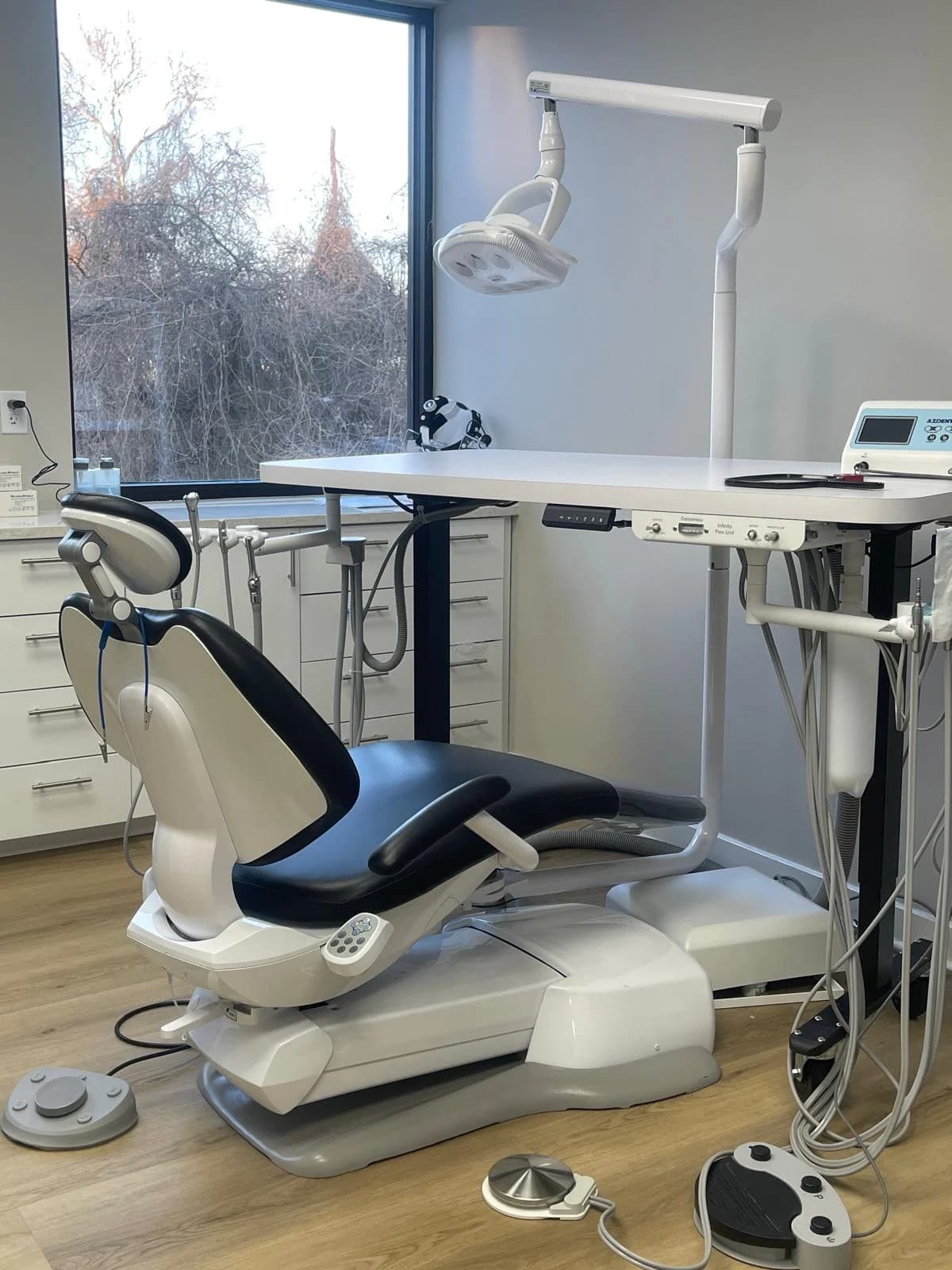
The photograph further down this page shows appliances and teaching models on a shelf in our office. It is not a patient of this practice. We do not publish patient photographs.

TMJ is short for the temporomandibular joint, the hinge in front of each ear that lets your jaw open, close and slide sideways. When that joint and the muscles working around it are under steady load, usually from clenching or grinding, the result is often a jaw that feels tight on waking, headaches at the temples, aching around the ear with nothing wrong in the ear, or a joint that clicks. A splint is a custom appliance worn over the teeth, most often during sleep. It places a controlled surface between your upper and lower teeth, which changes how load travels through the joint and gives the muscles less reason to brace. It is designed against your own bite, and that is the part a tray bought off a shelf cannot do.
We check the joint, the muscles and the way your teeth meet, and look for the wear patterns clenching leaves behind. Those are visible and we can show you.
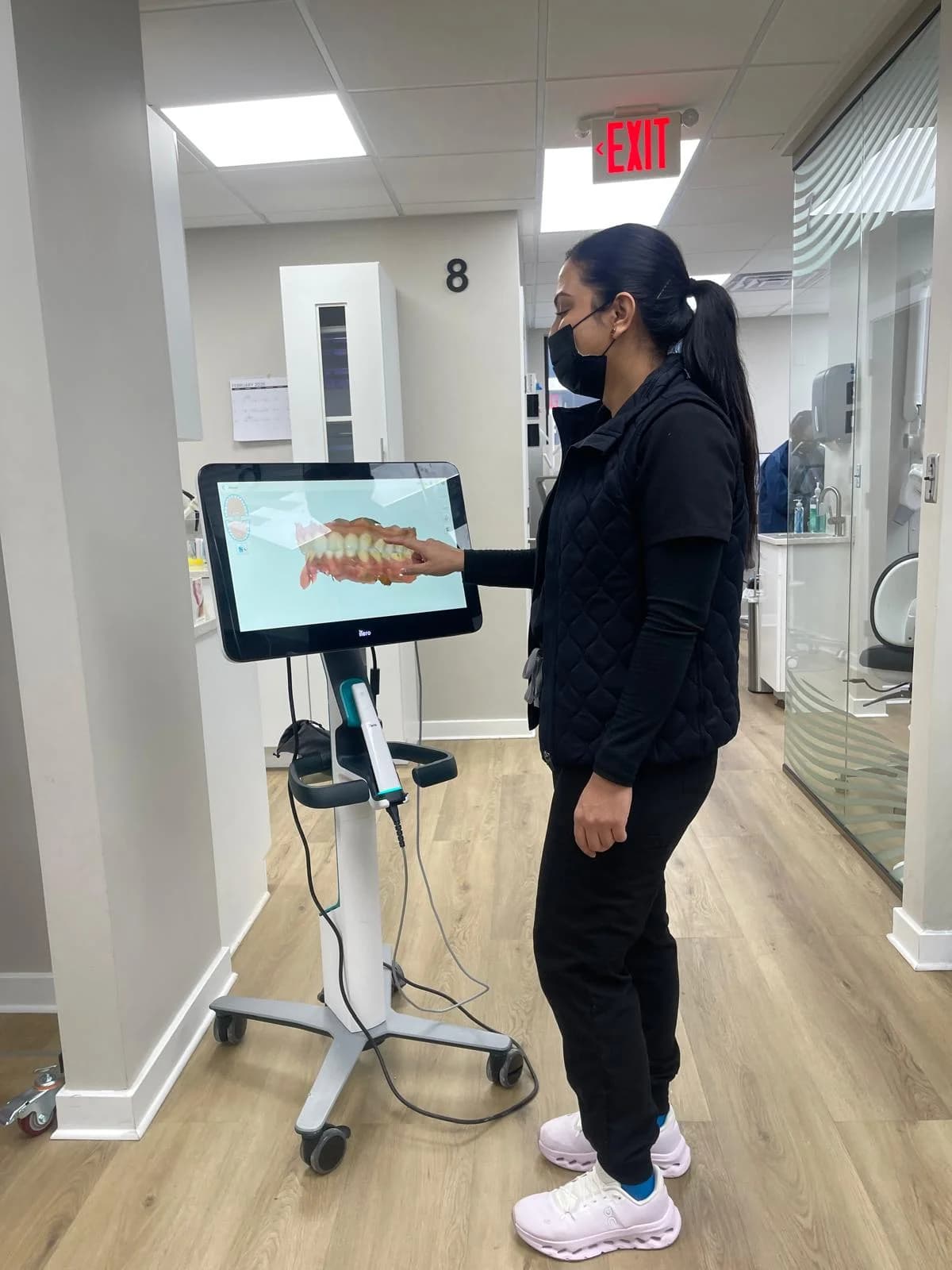
A digital scan records both arches and how they come together. The appliance is designed against that record rather than to the shape of the teeth alone.
At delivery the surface is adjusted so contact is even across it. Small reshaping of enamel is sometimes part of this, where a few teeth are carrying more than their share.
We see you again once you have slept in it. Muscles typically settle over the first weeks and the appliance often needs adjusting once or twice while they do.
Clenching and grinding wear teeth down quietly, and the flattened edges are usually visible long before anything hurts. If it has been a while since anyone looked, here is what a first visit here involves.
Protects enamel from the wear, chipping and cracking that grinding causes
Takes load off the joint and gives overworked jaw muscles a chance to settle
Designed against your own bite, which a boil-and-bite tray from a shelf is not
Reduces the forces that shorten the working life of fillings and crowns
We treat this as a bite problem rather than an order for an appliance, which means examining the joint and the muscles before anything is made. It also means being straight with you about what a splint does. Jaw pain has more than one cause, so an appliance helps many people a great deal and helps some people only a little, and no one can tell you which you will be before you try it. We are general dentists providing appliance therapy here, not a jaw-pain specialty clinic. Where the picture points somewhere else — a joint that locks or catches, or disturbed breathing at night driving the grinding — we will tell you that plainly and help you find the right person.
Schedule a consultation to discuss your options and see if this treatment is right for you.