


New patients start here

How the first appointment runs, how insurance and payment are handled, and how to book.

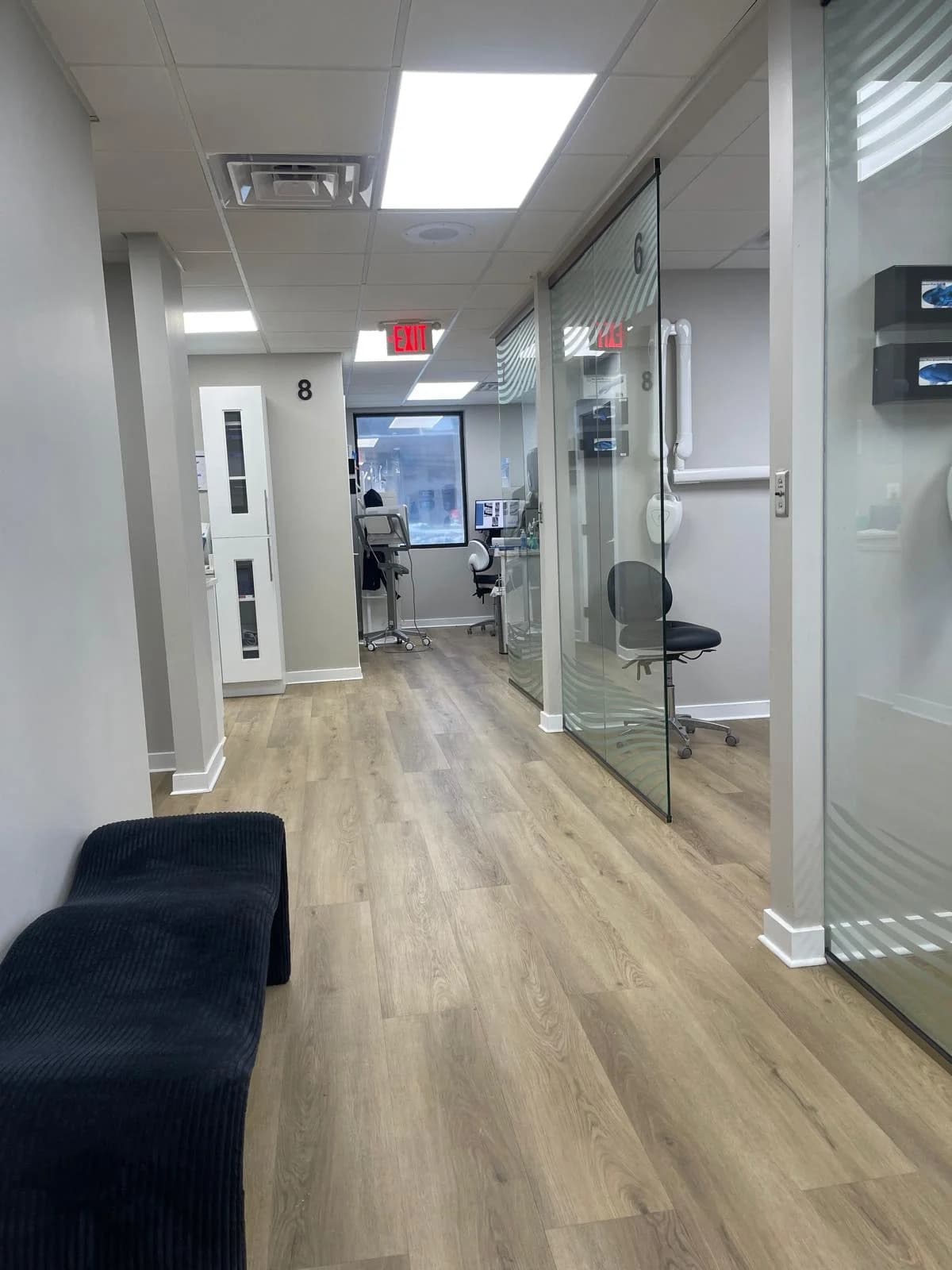
A treatment room at Advanced Dental Care of Stafford

Your first visit

Plan on 60 to 90 minutes

That covers your records, the exam, a cleaning in most cases, and the conversation at the end. Here is the order it happens in, and why each part is there.

  1. Your health history, first

    Before anyone looks in your mouth we go through your medical history and every medication you take. Blood thinners, blood pressure medication, diabetes, a heart condition — any of these can change what is safe to do that day. It is not a formality.

  2. X-rays and photos

    Decay between two teeth, or bone loss under the gumline, does not show up in a mirror. Digital X-rays and intraoral photos put both on a screen, and we turn the screen toward you so you can see what we are describing.

  3. The exam

    A dentist checks each tooth, then measures the gum pockets around them with a small probe. Those numbers say whether the gum is still attached where it should be. Your bite and the soft tissue in your cheeks, tongue and palate get checked too.

  4. A cleaning, in most cases

    Most first visits include a cleaning that removes hardened plaque a toothbrush cannot shift. If the pocket readings show the problem sits below the gumline, a routine cleaning will not reach it — we will explain what does before we do anything different.

  5. What we found, in writing

    We tell you what we found, sorted by what needs attention now and what can wait. You leave with it written down, including what your plan is expected to cover, before you agree to any treatment.

If it has been years since your last appointment, that is one of the more common reasons people call us, and it does not change how the visit runs. For the clinical detail — what the exam checks, what the X-rays find, what a cleaning actually removes — Dr. Abdoun walks through the whole appointment here.

What to bring

Five things and you are set

Give yourself an extra ten minutes for the new-patient paperwork. Running behind? Call and we will work with you.

Insurance and payment

The money part, before you are in the chair

We work with most PPO plans. Coverage moves around a great deal from plan to plan, even between two plans sold by the same insurer, so we verify your benefits with your plan directly rather than reading them off the card. Call with the card in front of you and we can tell you where you stand before you come in.

We accept Virginia Medicaid.

Nothing gets scheduled before you have seen the numbers. After the exam you get the plan written down — what we recommend, what your plan is expected to cover, and what would be left for you. If that total is more than you want to take on at once, say so then. Most treatment can be phased, and we would rather build a plan you can actually start.

Check your coverage in one call

Have your insurance card ready and we will confirm what your plan covers before you book.

Call (540) 288-2800

More on insurance and payment →

If you are nervous

Say it when you call, not when you arrive

Knowing in advance changes how we plan the appointment — what gets explained first, when we stop, how much time goes on the schedule. For many people that is enough on its own.

Sedation is also available here, which matters most for people with a strong gag reflex, a long restorative appointment ahead of them, or a history that makes sitting through treatment hard. Which approach suits you depends on your health history and the treatment planned, so a dentist goes through it with you before anything is scheduled.

Questions new patients ask

How to book

One phone call and we take it from there

Call the office Monday through Friday, 9:00 AM to 5:00 PM. Say it is a first visit and roughly what is going on, and we will find a time with you. There is no online booking on this site — if it is easier, send the contact form and we will call you back.

In pain right now? Call first. We can talk through what is happening, tell you what to do in the meantime, and get you in as soon as the schedule allows. What to do in a dental emergency →