Sedation dentistry in Stafford, VA

Three options, how they genuinely differ, and how to work out which one fits.

Someone reclined in a dental chair beneath the overhead light, seen from behind

What sedation does

Anxiety is a physical state, not only a feeling

When you are frightened, your body raises adrenaline. Muscles tense, your heart rate climbs, and your gag reflex turns more sensitive. Pain perception shifts too — the same stimulus genuinely registers as worse when you are braced for it, because the nervous system amplifies signals it already expects to be a threat.

Which is why being told to relax does not work. You cannot decide to lower your own adrenaline.

Sedative medication acts on receptors in the brain that damp that response down. The result is not unconsciousness. The part of you scanning for threat quietens, and the rest follows — muscles loosen, the gag reflex settles, and time passes differently.

This is also why sedation often changes the treatment itself and not only the experience of it. Someone who is not tensing, flinching or gagging is easier to treat well, and a longer appointment becomes possible, which for many people means fewer separate visits.
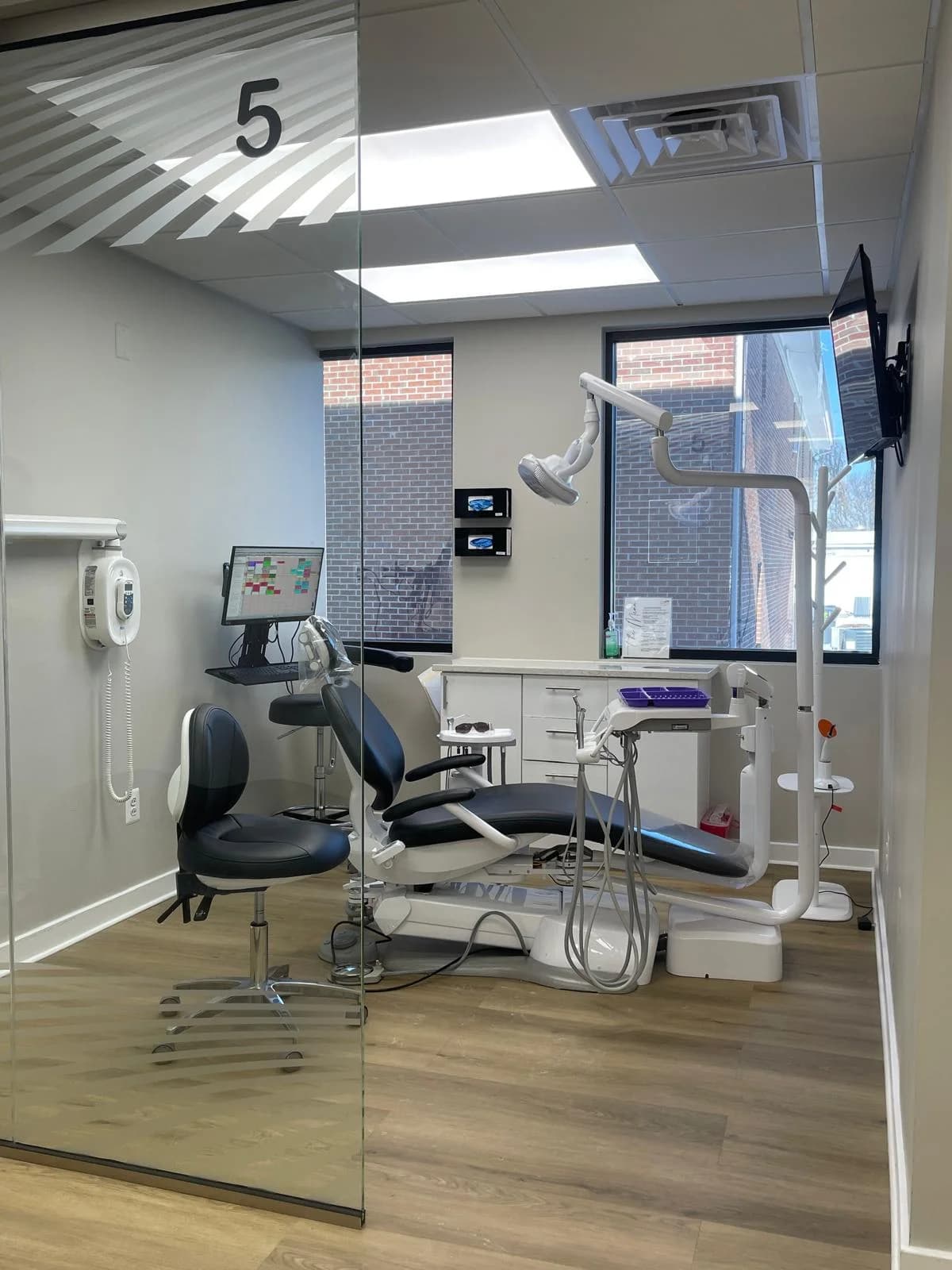
Your options

Three options, and they differ more than people expect

Sedation runs on a spectrum, and Advanced Dental Care of Stafford offers all three of the options below. Which one suits you is a clinical decision rather than a menu choice, and it depends on your health history as much as on how anxious you are.

Inhaled

Nitrous oxide

You breathe it through a small mask that sits over your nose, mixed with oxygen. It takes effect within a few minutes, and it leaves the same way it arrived — you breathe it back out, so it clears within minutes of the mask coming off. That one fact is why this option behaves so differently from the other two. You stay awake and able to talk the whole time. Most people describe a light, floaty calm and a sense of not much minding what is going on.

How it is given
Breathed through a mask over your nose
What most people remember
The appointment, in normal detail
Driving home
Most people are cleared to drive themselves, and the dentist confirms that with you on the day

Tablet

Oral sedation

A tablet, taken before your appointment. It is absorbed through your digestive system, so it comes on gradually and cannot be turned up or down once it is working — that single limitation shapes everything else about this option. It goes deeper than nitrous. You stay able to respond, but many people remember little of the visit afterwards, and for someone carrying a bad memory of a previous appointment, that gap is often the point.

How it is given
A tablet, taken before you arrive
What most people remember
Patchy, and often very little
Driving home
No. Arrange a driver both ways, and expect to need the rest of the day for it to clear

Intravenous

IV sedation

Given through a small line placed in a vein in the arm or hand. Because it reaches the bloodstream directly rather than by way of the stomach, the level can be adjusted continuously while treatment is happening, instead of being fixed the moment a tablet is swallowed. It is the deepest of the three. Recall of the appointment is usually minimal or absent. It typically suits severe anxiety, long or complex treatment, and people for whom the lighter options have not been enough.

How it is given
Through a small line placed in a vein
What most people remember
Usually little or nothing
Driving home
No. Arrange a driver, plan a quiet rest of the day, and expect a more detailed medical review beforehand

At every level

What does not change, whichever one you have

Sedation is not general anaesthesia

At all three levels you stay conscious and able to respond. You are not put under. Your own breathing and your own reflexes carry on throughout.

You are still numbed

Sedation works on the anxiety. Local anaesthetic works on sensation in the tooth being treated. They do different jobs, you get both, and sedation is never used in place of numbing.

You can still stop us

Raise a hand and we pause. Nothing about being sedated takes your control away, and for a lot of people, knowing that option is there matters more than ever using it.

Who it helps

Fear is the common reason, not the only one

People ask about sedation for four fairly distinct reasons, and they do not all start with being frightened.

Dental anxiety

For some people it traces to one specific appointment. For others it is the sounds, the loss of control, or lying back while someone works above them. Sedation does not talk you out of the fear. It lowers the physical response sitting underneath it, which is the part you cannot argue with.

A strong gag reflex

Impressions, X-ray sensors and any work toward the back of the mouth can be genuinely hard to sit through. The gag reflex is partly under nervous-system control, so damping that response down typically settles it.

Trouble getting numb

Some people need more local anaesthetic than usual, or find one particular tooth stubborn. Inflamed tissue is often the reason and anatomy sometimes is. Sedation is not a substitute for anaesthetic, but it takes the distress out of the extra time it can take to get you properly numb.

Long appointments

For many people the barrier to a long restorative visit is not the discomfort, it is staying in the chair for two hours. Sedation often makes that length manageable, which can mean the same work is done across fewer visits.

The last of those is the one people underestimate. If you are looking at a long restorative appointment or implant treatment, the length of the visit is often the real obstacle, and it is a solvable one.


Before anything is booked

The conversation comes before the medication

A dentist goes through your medical history and every medication you currently take, then recommends an approach. That review is the appointment before the appointment, and it is not a formality.

Medication matters here more than most patients expect. Sedatives interact with a wider range of things than people realise — other medication that has a sedating effect of its own, some antidepressants, some blood pressure medication, and over-the-counter supplements that never feel like they count. An interaction can change how deeply a dose works, in either direction. It is the single most useful thing you can bring us, and it is the reason the list below starts where it does.

The last item on that list is worth thinking about before you call. Different fears respond to different things, and some are answered better by how an appointment is run than by anything you take. Someone whose fear is not knowing what is happening usually does better with narration and frequent pauses than with a tablet — Dr. Abdoun writes about that approach here.

What to have ready

  • A written list of every medication and dose, including anything over the counter
  • Any supplements you take, which people almost never think to mention
  • Your medical conditions, particularly anything affecting breathing, the heart or the liver
  • Whether you are pregnant or might be, which changes the options
  • What actually happened last time, if something did

Questions people ask before they book

Talk it through

Which one fits is a conversation, not a form

Which option suits you depends on your health history and on what actually needs doing, so it is not something to settle from a website. Call the office Monday through Friday, 9:00 AM to 5:00 PM, say that sedation is what you want to ask about, and a dentist will go through it with you. There is no online booking on this site — if it is easier, send the contact form and we will call you back.

Not sure sedation is what you need? A consultation is a conversation, not treatment. For a lot of people the first visit back is an exam, X-rays and a plan, and nothing is decided that day that you have not agreed to. What a first visit involves →