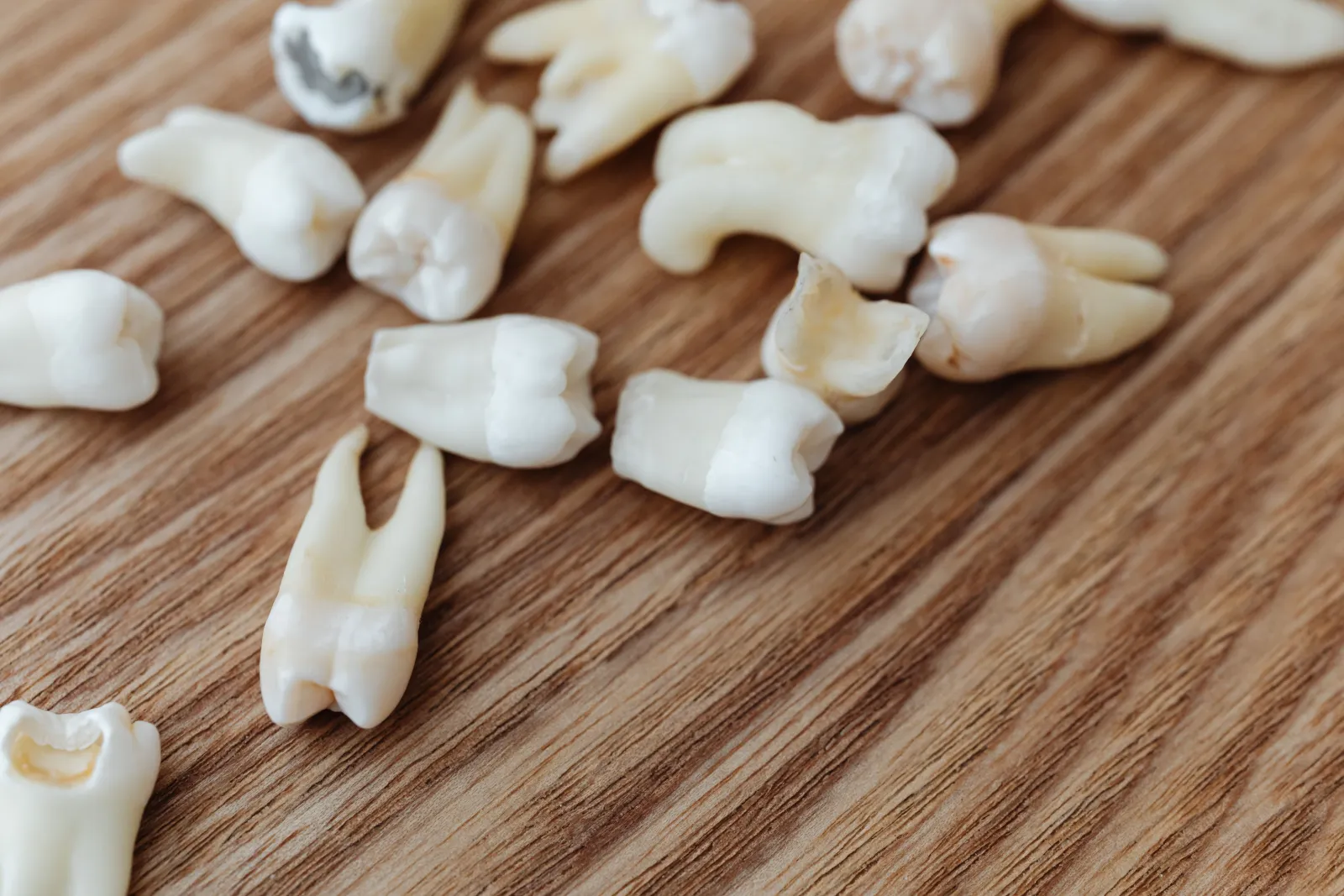
You noticed a tooth looks a shade darker than its neighbors. Maybe it hurt for a while and then stopped, and you took that as good news. Both of those can be signs of a dead tooth.
The good news is that a dead tooth is a problem with one part inside the tooth, so the tooth itself can often be kept.
What does "dead tooth" actually mean?
Inside every tooth, under the white enamel and a harder layer called dentin, sits soft tissue called the pulp. The American Association of Endodontists describes it as tissue holding blood vessels, nerves and connective tissue.
A "dead" tooth is one where that pulp has died. The enamel and root are still there and the tooth still sits in your jaw, but the living core is gone.
The same AAE page lists what damages the pulp: deep decay, repeated dental work on one tooth, a faulty crown, or a crack or chip. An injury can do it too, even with no visible damage.
Why would a dead tooth not hurt?
Tooth pain is a nerve signal, and the pulp holds the nerve, so when the pulp dies the source of the signal goes with it.
A tooth often goes through a loud stage first. The pulp swells inside a rigid shell of dentin with nowhere to expand, and the pressure hurts. Then the nerve dies and the pain fades. MedlinePlus says it plainly about abscesses: the toothache may stop, but the infection stays active and keeps spreading.
So a tooth that stopped hurting tells you where the problem has got to, not whether you have one.
Some teeth skip the loud stage, because the decay or crack reached the pulp without much warning.
Why does a dead tooth turn gray?
Color change is the other sign people notice, and it comes from the same event. When the pulp dies, blood cells inside it break down. A 2023 case report in the journal Cureus explains what happens next. The breakdown products spread into the dentinal tubules, the microscopic channels that run through dentin, and discolor the crown from the inside.
The same report notes that the longer those colored components sit in the pulp, the darker the tooth gets. That is why a tooth can shift from a slight shadow to a clearly darker color as time passes.
A gray tooth is not proof by itself, because stains and old fillings can change a tooth's color too. A dentist can tell which one you have.
What else are the signs of a dead tooth?
Gray or brown color and a pain that went away are the quiet signs. The AAE lists others that point to a damaged pulp:
- Severe pain when you bite or chew
- A pimple on the gum near the tooth
- Swollen or tender gums
- Lingering sensitivity to hot or cold after the drink is gone
- A chipped or cracked tooth, or deep decay
MedlinePlus also lists a bitter taste and bad breath among the symptoms of a tooth abscess. None of these confirms a dead tooth on its own, but together with a dark tooth they are a reason to have it looked at.
Is a dead tooth harmful if it does not hurt?
Yes, it can be, and the reason is physical. The dead pulp is no longer alive to fight bacteria, and it sits in a space bacteria can reach through the decay or crack. The AAE says pulp inflammation or infection left untreated can lead to an abscess. MedlinePlus describes an abscess as a pocket of pus, and says the infection can spread from the root to the bone supporting the tooth.
The abscess is the stage people notice: a swollen gum, a pimple on the gum, pain on biting. A swollen area of the jaw is also possible, and MedlinePlus calls it a very serious symptom.
If swelling makes it hard to breathe or swallow, go to the emergency room first, and call us after.
A dark tooth, or a pimple on the gum with none of those other signs, is a call to our office. We can talk through your symptoms and see you as soon as the schedule allows. Our emergency dentist page lists what to do in the meantime.
What happens at the exam?
The dentist looks at the tooth and the gum around it, asks about its history, and takes an X-ray. The X-ray shows the root and the bone around its tip, which is where an infection leaves its mark. The dentist may also tap on the tooth or test how it responds to cold. A dead pulp does not react the way a living one does.
The exam tells you what state the tooth is in, and which of the two paths below fits it.
Can a dead tooth be saved?
The pulp cannot come back to life, but the tooth around it often can be kept, and that is the first of two honest options.
A root canal. The dentist removes the dead pulp, cleans and disinfects the root canals, and seals the space. The AAE says the tooth is then restored with a crown or filling for protection. We cover the steps in our root canal post and on our root canal therapy page, so we will not repeat them here. If an online story about root canals worries you, our post on the illness myth answers it.
An extraction. Sometimes too little sound tooth remains to hold a filling or crown, or the tooth has fractured too deeply. Removing it is then the better choice. The AAE points out that a space left by an extracted tooth can let neighboring teeth shift.
So an extraction usually comes with a conversation about replacing the tooth. Dental implants are one option we can walk you through.
Neither option comes with a promise. A root canal does not always settle an infection, and an extraction closes the question of the tooth but opens the question of the gap. The exam and X-ray tell you which situation you are in, and the decision is yours.
If the discoloration came after a break or chip, our post on chipped and broken teeth covers how much tooth remaining decides the treatment. A dark spot on one surface is a different question, and our post on black spots on teeth covers that.
What should you do next?
Call Advanced Dental Care of Stafford at (540) 288-2800, or use our contact page, and tell us what you have noticed. Tell us which tooth, when it changed color, and when it last hurt.
More from Our Blog
What Is a Flipper Tooth, and How Long Can You Wear One?
A flipper tooth is a light removable partial denture that fills a gap while something longer-lasting is planned or healed. Here is why it is a stand-in, and what usually follows.
Read more
Hydroxyapatite Toothpaste: Does It Work as Well as Fluoride?
Hydroxyapatite toothpaste has early evidence behind it, but fluoride has far more. Here is what each does to enamel, and what to keep doing whichever tube you pick.
Read more
Clear Braces or Clear Aligners? What 'Clear' Really Means
Clear braces are tooth-colored brackets joined by a wire. Clear aligners are removable plastic trays. Here is how each one moves teeth and what 'clear' does and does not hide.
Read more