You asked two offices what veneers cost and got two answers that were nowhere near each other. Both offices may be right, because they may not be quoting the same job, the same material or the same stages.
"How much do veneers cost" has no single answer, because a veneer quote is a sum of stages. Change one stage and the total moves. Once you know the stages, you can read any quote, ours included, and see what it covers, so this post walks through each one. For the short version of why we do not name a figure before an exam, see the cost question in our porcelain veneers post.
How much do veneers cost, and what is in the number?
A veneer is a thin shell that covers the front of a tooth. The price covers the planning, the shaping, the shell, the fitting visits and the care that keeps it in place. A quote that lists only a price per tooth hides most of that work.
When two quotes differ, one of them usually includes a stage the other leaves out or uses a different material. That is the first thing to check.
Does the material change the price?
Yes, and it changes more than the price. The American Dental Association describes a porcelain veneer as a custom-made shell that is strong, long-lasting and natural-looking. A composite veneer comes from tooth-colored filling material that the dentist bonds to the tooth. The ADA says porcelain tends to be the more expensive option, and how each one gets made helps explain why.
A lab makes a porcelain veneer outside your mouth, so the quote carries a lab stage and the extra visits that come with it. The dentist builds a composite veneer on the tooth, so no lab stage is involved. The tradeoffs follow from the material. According to the ADA, composite may need less enamel removed and fewer visits, and it is easier to fix if damaged. Porcelain resists stains and wear better.
So a lower quote can be a fair price for a different material. Ask which one the quote assumes, and compare like with like. Our cosmetic dentistry page lists what the office offers, and the composite restorations page covers our tooth-colored fillings and bonding.
How many teeth, and what does each one need?
The number of veneers is the biggest multiplier. It depends on how many teeth show when you smile and how closely the new ones must match their neighbors. A smile with four veneers beside natural teeth has to blend in, while the dentist designs a smile with ten as one set.
What each tooth needs matters as much as the count. For porcelain, the dentist removes some enamel to make room for the shell. Enamel does not grow back, so the ADA states plainly that the treatment is not reversible. A tooth with a large filling, a chip or a crown needs more planning than a clean one. That planning shows up in the quote.
What happens before the veneers are made?
Two things can come first, and both add to the total. The first is planning, which at our office uses Digital Smile Design, where we take photos of your face and a scan of your teeth. We then build a proposal that you see on a screen between visits. Seeing it commits you to nothing, because no irreversible work happens before you sign off. Ask whether planning is inside a quote or billed on its own.
The second is groundwork. Veneers sit on the tooth and finish at the gumline, so the tissue and the bite underneath them have to be ready:
-
Gum disease. Inflamed gums bleed, and bleeding makes it hard to keep the edge dry while the dentist bonds the veneer. Gum disease also keeps progressing under a veneer, so it needs treating first.
-
Clenching and grinding. A thin shell of ceramic takes the full force of a clench. If you grind at night, a custom splint can protect it, and that appliance is a cost of its own.
-
Tooth color and position. A veneer does not change color once it is made, so any whitening belongs before the shade is chosen. If teeth are crowded or rotated, clear aligners may come first.
None of this is an upsell, because it is simply the order the work has to happen in. A quote that skips it may have assumed you need none of it, or may leave that bill for later.
What do the lab and the temporary veneers add?
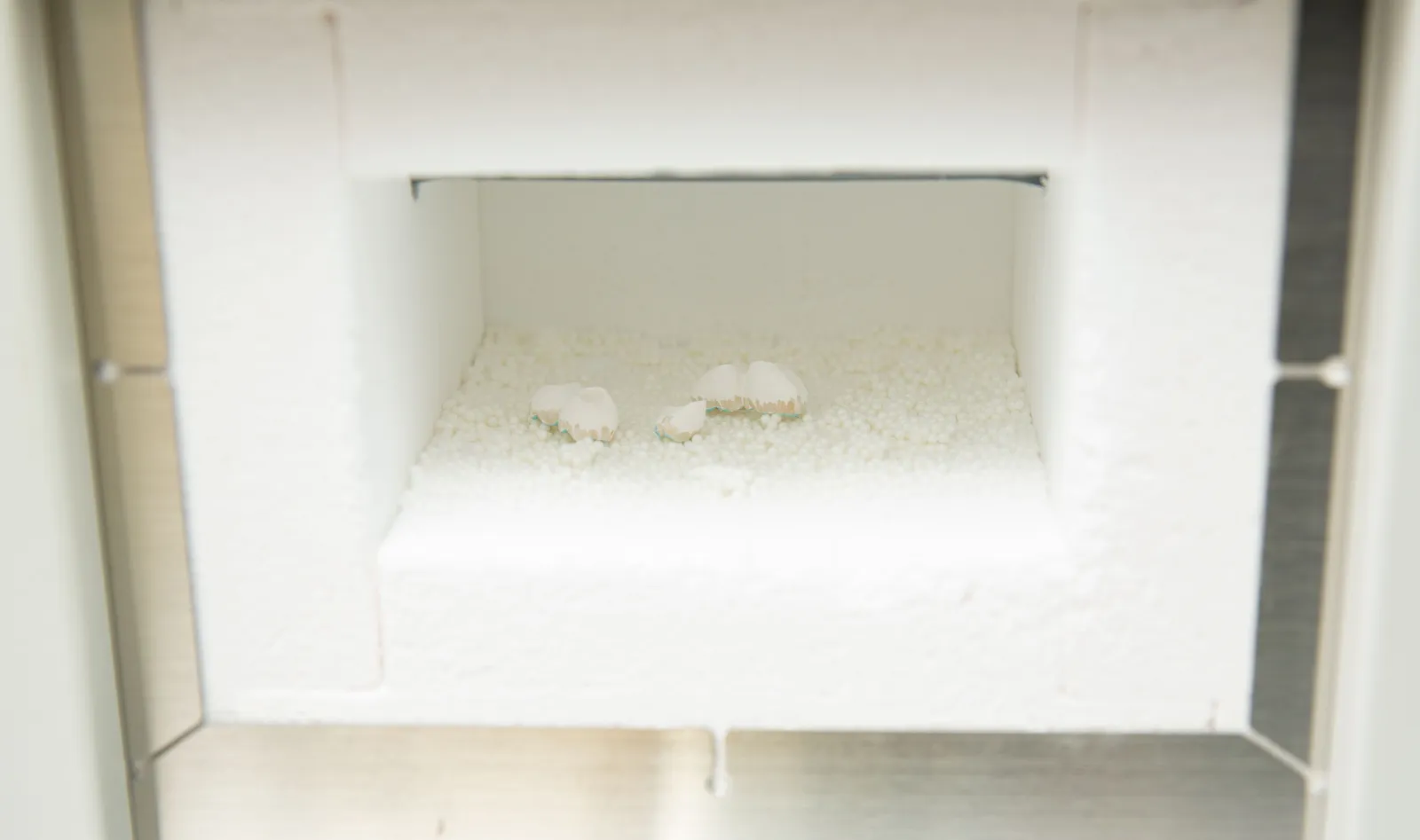
After shaping, a lab makes the final veneers, and a technician matches the shade, shape and translucency to your teeth. If the first fit or color is off, one may need remaking, and whether that is covered is a question for the quote too.
While the lab works, temporary veneers cover the prepared teeth, protect the exposed tooth surface and let you leave the office with a normal-looking smile. They count as a stage of their own, with materials and chair time behind them.
Does dental insurance pay for veneers?
It may not. The ADA says veneers count as cosmetic dentistry, so your plan may not cover them unless they are deemed medically necessary.
That wording turns on medical necessity, so the reason for the veneer matters to the plan. Your plan's own rules decide, and they differ from plan to plan.
Call us with your card in hand and we verify your benefits with your plan. After the exam you get the plan written down with the numbers on it. It shows what we expect your plan to pay and what your balance would be. Nothing is scheduled until you have read it. Our insurance and payment page explains the process, and our post on reading your dental insurance shows what to look for in the plan itself.
What should you ask about any veneer quote?
Take this list to any office, including ours, and compare the answers line by line:
-
How many veneers does the quote cover, and which teeth are they for?
-
Which material does the quote assume, since porcelain and composite are priced and made differently?
-
What does the price include, such as the planning, the temporary veneers, the lab work and the follow-up visits?
-
Is any gum, bite or whitening care part of the quote, or is it listed as a separate line?
-
Who does the shaping and the bonding? The ADA says irreversible dental procedures belong with licensed, trained dentists. Its news release on veneer techs says the same and points patients to its veneers page for checking a provider's license.
-
What happens if a veneer chips or comes loose, and is that answer written into the plan?
-
Can the work be phased, and what are the stages?
Treatment can be phased, and the written plan is where the stages and their numbers belong.
If you would like a quote that answers these questions for your teeth, call us at (540) 288-2800 or use our contact page. Ask about payment options while we go through the plan together.
More from Our Blog
Your Crown Fell Off: What to Do Next
A temporary crown is held on with a weaker cement, so it can come off. A final crown comes off when its seal or the tooth under it fails. Either way, keep the crown, protect the tooth and call us.
Read more
A Dead Tooth: How to Tell, and Why It May Not Hurt
A dead tooth often goes quiet because the nerve that carried the pain has died, and the infection stays. Here is how to spot one and what your two options are.
Read more
What Is a Flipper Tooth, and How Long Can You Wear One?
A flipper tooth is a light removable partial denture that fills a gap while something longer-lasting is planned or healed. Here is why it is a stand-in, and what usually follows.
Read more