If you are searching for a flipper tooth, you probably have a gap, or you are about to. A tooth is out or coming out. You want to know whether a stand-in can cover the gap while you plan what comes next.
A flipper is exactly that, and it is worth knowing what it can and cannot do before you rely on one.
What is a flipper tooth?
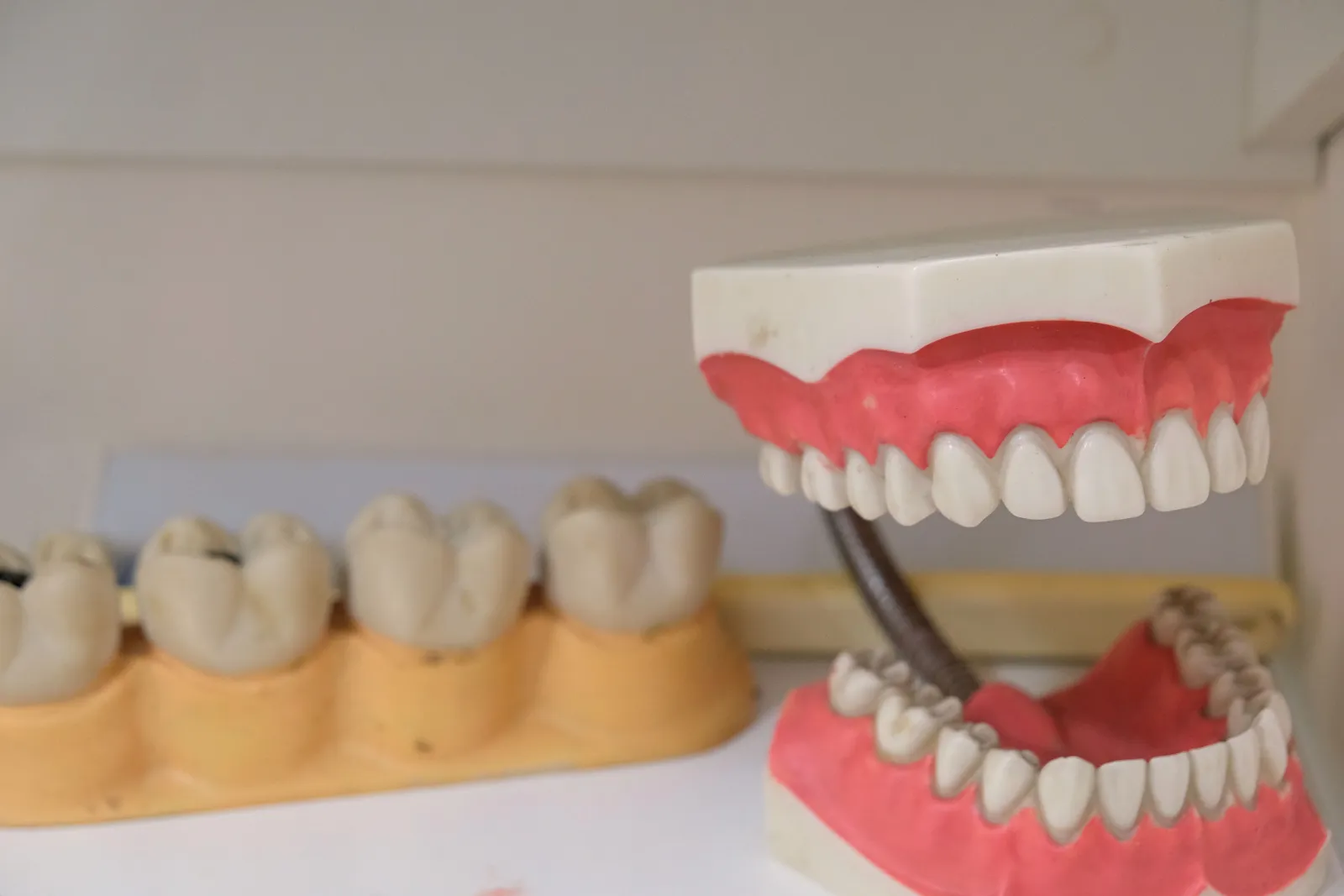
"Flipper" is a common name for a lightweight removable partial denture. It holds one or a few false teeth in a plastic base tinted to look like gum. The American Dental Association describes removable partial dentures as replacement teeth on pink or gum-colored plastic bases. Some add a metal framework and clasps that connect to your natural teeth.
Dentists call a short-term version an interim partial denture. A dental journal case report describes these as used to temporarily restore the look, speech and bite of a mouth with teeth missing.
A flipper has no root, so it sits on the gum over the gap. Some partial dentures hold on with a clasp that hooks a neighboring tooth. You take it out to clean it, which keeps plaque off the plastic.
Why is a flipper only a stand-in?
Four things limit a flipper. The studies below are about removable partial dentures in general, and where a study used metal frameworks we say so.
It shares the chewing load. A tooth passes bite force into the jaw through its root, while a flipper has none. A prosthodontics review reports that in designs extending over the ridge, support is shared between the gum and the clasped teeth. The clasped teeth end up carrying part of the load.
In a records study of 842 clasp-held partial dentures in 612 patients, losing a clasped tooth accounted for 95.6% of the failures. Those dentures had metal frameworks, so the finding is about clasped partials in general, not flippers alone.
It holds plaque against the teeth it touches. Plastic and clasps give plaque a place to sit. A study of 107 patients tracked partial dentures held by clasps or attachments. After one month, the teeth that anchored the denture carried more plaque than the other teeth. After three months those same teeth also had deeper gum pockets than the rest.
It irritates the gum under it. The same prosthodontics review links plaque under a partial denture to inflamed tissue, called denture stomatitis. A systematic review found an association between wearing a partial denture and stomatitis, in anywhere from 1.1% to 36.7% of wearers across eight studies. It could not prove that the denture itself causes the problem.
The ADA's advice is to brush the denture every day and take it out before bed. It warns that a poorly fitting denture can cause sores or infections.
The fit keeps changing. After a tooth is removed, the bone under the gap shrinks. A systematic review of 20 studies found the bone ridge lost 29% to 63% of its width within six to seven months. The ground a removable denture rests on changes shape for months, so a base that fit on day one can fit differently later.
What does this mean if you wear one for years?
The gap in your smile is covered, and the rest of the mouth carries the strain. The clasped teeth can take more load and more plaque than they would on their own. The gum under the plastic can stay irritated when the denture is not cleaned every day or is worn overnight. The base can stop fitting as the ridge changes, and the denture eventually wears out.
On wear, the best figure we found is from a records review of 1,246 patients who received removable partial dentures between 2010 and 2021. Acrylic ones had a median survival of 45 months, against 73 for metal-based ones. That study covers partial dentures in general, not flippers alone, and no source we found sets a safe wear time for a flipper specifically.
So the honest answer to "how long can you wear one" is that it depends on what you are waiting for. A flipper is built for the wait, not for the long run.
When is a flipper a good idea?
A flipper is useful while something else happens, such as an extraction site healing or an implant or bridge being made. In those cases it keeps the space filled and spares you walking around with a missing tooth in the meantime.
A flipper does not replace the root. It sits on top of the ridge and does not go into the bone. Leaving a gap open also affects the teeth beside it, and we explain how in what happens to your other teeth when you lose one.
What usually comes after a flipper?
Each of these is a longer-term answer to the same gap, and we have written about each.
Dental implant
An implant replaces the root as well as the crown. Dental implants are placed in the jaw, and the bone grows onto them. How long a single implant takes is its own post.
Bridge
A bridge uses the neighboring teeth to hold a replacement tooth. Our page on crowns and bridges explains how, and bridges compared with implants lays out the tradeoff.
Partial or full dentures
Partial and full dentures are removable, and our guide to dentures in Stafford covers the types.
Implant-supported dentures
These attach a denture to implants, and the page on implant-supported dentures explains how. A second post on how removable and fixed implant dentures differ helps you choose.
How do you decide what to do about the gap?
Whether any stand-in makes sense depends on three things. They are which tooth is missing, the health of the teeth beside the gap, and what you plan to put there next. That is decided at an exam, after we look at the gap and the teeth around it.
At the exam we go through the longer-term options we offer, which are dentures, implants and bridges. You hear what each one involves, and the decision is yours.
Call us at (540) 288-2800 or use the contact page to set up an exam at Advanced Dental Care of Stafford.
More from Our Blog
Hydroxyapatite Toothpaste: Does It Work as Well as Fluoride?
Hydroxyapatite toothpaste has early evidence behind it, but fluoride has far more. Here is what each does to enamel, and what to keep doing whichever tube you pick.
Read more
Clear Braces or Clear Aligners? What 'Clear' Really Means
Clear braces are tooth-colored brackets joined by a wire. Clear aligners are removable plastic trays. Here is how each one moves teeth and what 'clear' does and does not hide.
Read more
Can Receding Gums Grow Back?
No. Gum that has pulled back from a tooth does not grow back on its own. You can deal with what is causing it, and a gum graft can cover an exposed root when that is worth doing.
Read more