You finish brushing, reach for the bottle, and then a headline tells you mouthwash kills good bacteria or raises your blood pressure. So, is mouthwash bad for you? The risks found so far are small or unproven. Whether you need a rinse at all depends on what is in the bottle and why you use it.
What is actually in the bottle?
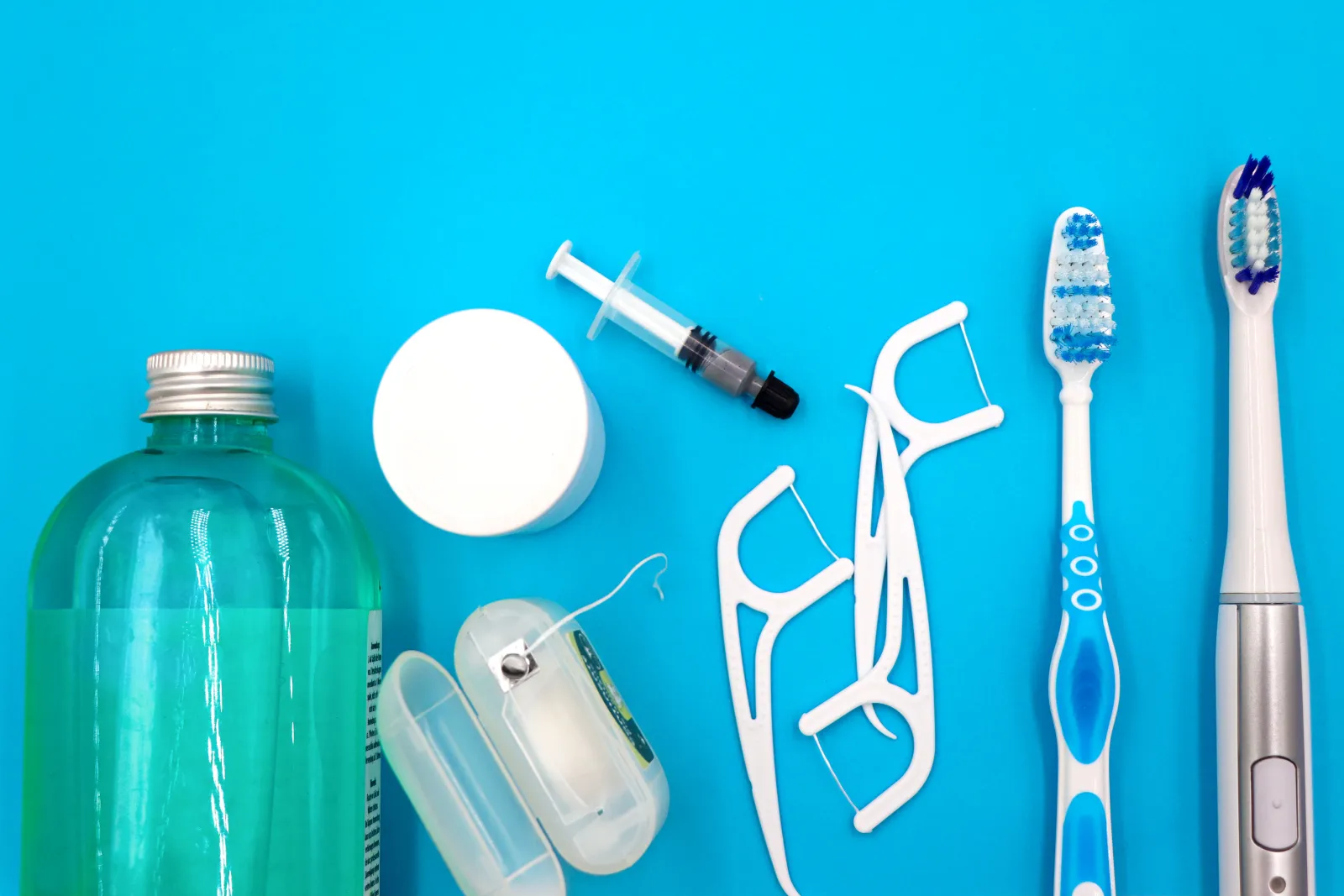
The American Dental Association sorts rinses into two groups. Cosmetic rinses mask odor and leave a pleasant taste, and the ADA says they do nothing chemical or biological beyond that short-lived effect. Therapeutic rinses carry an active ingredient with a job, such as fluoride against cavities or an antiseptic against plaque and gum inflammation.
The antiseptics sold in stores include essential oils and cetylpyridinium chloride (CPC), and some of these rinses also contain alcohol. Chlorhexidine, another antiseptic, is available in the US only by prescription.
Does mouthwash dry out your mouth?
An alcohol rinse can. For people with a dry mouth, the ADA notes that alcohol can be drying and suggests an alcohol-free rinse instead.
Saliva washes food off the teeth and neutralizes the acid that plaque bacteria make after you eat. It also carries calcium and phosphate back into enamel that acid has softened. With less saliva, acid sits on the teeth longer and that repair slows down. If your mouth already runs dry from medicines or from breathing through your mouth at night, an alcohol rinse can add to the problem.
Why does chlorhexidine stain, and how long do you use it?
Chlorhexidine molecules carry a positive charge, so they cling to the teeth and gums. The prescribing label for a 0.12% chlorhexidine rinse says about 30% of it stays in the mouth after rinsing. It then seeps back into your saliva slowly, so it keeps working after you spit.
That staying power is also the problem, because the same coating holds on to pigments from coffee, tea and red wine. The ADA lists brown staining of the teeth, tongue and fillings, a change in taste, and extra tartar as known side effects. It says CPC can cause brown staining too.
The label presents chlorhexidine as a treatment for gum inflammation (gingivitis) between dental visits, and it sets no fixed length of use. Its clinical studies ran for six months. In that testing, 15% of users developed heavy stain, against 1% of the comparison group. The label asks for a re-check and a professional cleaning at least every six months while you use it. That cleaning removes the stain from most tooth surfaces.
Does mouthwash kill good bacteria and raise blood pressure?
The idea behind this worry is real. Leafy greens and beets contain nitrate, and your salivary glands pull nitrate from your blood into your saliva. Certain bacteria in the mouth turn it into nitrite, which your body can then turn into nitric oxide, a molecule that relaxes blood vessels. An antiseptic rinse does not pick and choose, so it kills those helpful bacteria along with the harmful ones.
A one-week trial. Kapil and colleagues (2013) gave 19 healthy volunteers a chlorhexidine rinse for seven days. Nitrite made in the mouth fell by 90%, and blood pressure rose by 2 to 3.5 mmHg, starting within a day. That is a small rise, in a small group, over one week.
A three-year observational study. Joshipura and colleagues (2020) tracked store-bought mouthwash use in 540 overweight adults aged 40 to 65 in Puerto Rico who started without high blood pressure. Those rinsing twice a day or more reported a new high blood pressure diagnosis at 1.85 times the rate of less frequent users. A study like this shows a link, not a cause, and blood pressure measured at a single study visit showed no such link.
A 2026 review. Toonen and colleagues found five studies of chlorhexidine and blood pressure. Two of them had found a rise, but pooled together they showed no significant change. For people who were told to use the rinse, the reviewers judged any effect to be insignificant or very small.
If you have high blood pressure, that open question is a fair reason to skip a daily antiseptic rinse you do not need. It is not a reason to refuse a course your dentist prescribed.
Does mouthwash cause oral cancer?
The worry comes from alcohol, a known cause of mouth and throat cancer. So far the link is unproven. A 2012 review of 18 studies found no significant link between regular mouthwash use and oral cancer, including for rinses that contain alcohol.
A 2016 pooled analysis of 12 studies covered almost 9,000 people with head and neck cancer. It found no overall link for people who had ever used mouthwash. It did find small rises for cancer of the mouth and of the throat just behind it. It found them too in people who rinsed more than once a day, or for more than 35 years.
The authors note that the studies relied on people recalling past habits, which limits how firmly the result can be read. If you rinse several times a day out of habit, an alcohol-free rinse takes the alcohol out of the question.
What can a rinse add?
Fluoride is the ingredient that earns a rinse its place. It helps softened enamel rebuild in a form that resists acid better, and our post on what fluoride does to a tooth explains how. The ADA's 2013 clinical recommendations list a prescription-strength 0.09% fluoride rinse for people aged 6 and over who are at risk of cavities.
That risk runs higher with a dry mouth, with gums that have pulled back off the softer root, and with cavities that keep coming back.
The NHS advises against any mouthwash straight after brushing, because it washes off the fluoride your toothpaste left on the teeth. Pick another time, such as after lunch, and do not eat or drink for 30 minutes after a fluoride rinse. The ADA adds that children under 6 should not use mouthwash unless a dentist directs it, because they can swallow too much.
What can mouthwash not do?
It cannot remove plaque, the sticky film of bacteria that clings to each tooth. A liquid washes over the outer layer of that film without lifting it off. Between two teeth the film sits where the surfaces press together, and a rinse can wet that spot but cannot scrub it.
Only a brush, floss or another between-the-teeth cleaner breaks the film up. That is why the ADA says a rinse does not take the place of brushing and flossing.
It cannot remove tartar either, which is plaque that has hardened onto the tooth. Only instruments at a cleaning take tartar off, and that is part of what your exam and cleaning visit is for. A cosmetic rinse also hides bad breath for a while without fixing its cause. Our post on bad breath explains where the smell comes from.
Is mouthwash bad for you, or just unnecessary?
The risks found so far are small or unproven. Brushing twice a day with fluoride toothpaste and cleaning between your teeth does the work. A rinse is an add-on with a reason, such as a high risk of cavities or a rinse your dentist prescribed.
If yours is an antiseptic you use several times a day out of habit, you can stop, or switch to an alcohol-free fluoride rinse. If your dentist prescribed it, finish the course as directed.
If you are not sure a rinse fits your mouth, bring the bottle to your next checkup and ask us about it. Before then, you can call Advanced Dental Care of Stafford at (540) 288-2800 or send a message through our contact page.
More from Our Blog

How Long Does a Single Dental Implant Take, Start to Finish?
A single implant usually takes several months from start to finish, and most of that time is bone healing rather than appointments. Your timeline depends on whether the tooth is still in place, how much bone is left, and whether a graft comes first.
Read more
Wisdom Teeth Recovery: What to Expect, Day by Day
Most wisdom teeth recovery happens in the first week. The clot forms on day one, swelling peaks around days two and three, and dry socket usually shows up in the first few days if it is going to. Lower teeth that needed bone removed take longer.
Read more
How Much Does a Dental Crown Cost? What You're Paying For
A crown quote is a sum of parts: the material, any build-up or root canal the tooth needs first, the lab stage, and how your plan pays for major work. Here is what each part does.
Read more