One of the most common questions I hear is whether someone should get clear aligners or braces. It is a fair question, and most of the answers online compare the two on how they look and how much they cost. Those are the least useful things to compare them on.
The difference that actually decides your case is a mechanical one, and once you see it, everything else about both options makes sense.
What we offer here, stated plainly
Advanced Dental Care of Stafford provides clear aligner treatment. We do not place braces.
That is worth knowing before you read the rest of this page. Half of what follows describes something we do not do, and I have written it straight anyway, because you cannot choose between two options if someone only describes one of them properly.
If your exam shows braces are the better answer for your teeth, I will say so and refer you to someone who places them. A case pushed into the wrong appliance takes longer and finishes worse, which helps nobody.
How each one moves a tooth
Both appliances do the same underlying thing. Steady pressure on a tooth makes your body dissolve bone on one side of the root and rebuild it on the other. The socket is remodeled around the tooth as it travels.
Neither device pushes a tooth through bone. Both of them ask your bone to move out of the way.
The difference is where the force is applied — and that decides almost everything else.
Traditional braces
A bracket is bonded to each tooth and a wire is threaded through all of them. Because the bracket is fixed to the tooth and the wire is fixed in the bracket, the wire can twist as well as pull.
That lets it control the root, not just the crown. It can upright a tilted tooth, spin a rotated one, and pull down a tooth sitting too high in the gum.
The force is also continuous. The wire is working at three in the morning whether you were thinking about your teeth or not.
Clear aligners
An aligner is a shell that grips the outside of your teeth. Each tray is made slightly different from the one before, so seating it puts the teeth under pressure in a set direction. You change trays every one to two weeks as they catch up.
A shell can push a crown reliably. Controlling a root through a shell is much harder, because the tray only has the visible part of the tooth to hold on to.
Small tooth-colored bumps called attachments are bonded to some teeth. They give the tray something to grip, which extends its range, though not all the way to what a bracket and wire can reach.
And the force only exists while the tray is in. That is the trade you make for being able to take it out.
Which cases suit which
This follows directly from the mechanics above.
Aligners typically handle well: crowding, spacing and gaps, mild to moderate bite issues, and teeth that have drifted back after previous straightening. Most of that work is tipping crowns into line, which a shell does reliably.
Braces are usually the better answer for: severe rotations, teeth needing significant vertical movement, large jaw-size discrepancies, and cases where extractions leave big spaces to close. All of those need the root moved under control, for the whole of treatment, without a nightly gap.
If you fall in the second group, aligners are not a cheaper version of the right treatment. They are a different tool that does not do that job well, and I would rather send you to the right one.
The other differences, briefly
How it looks during treatment
Clear aligners are discreet. Most people will not notice them in ordinary conversation, which is why adults and older teens tend to ask about them first. Braces are more visible, though colored bands give younger patients a way to have some fun with it.
One thing to hear up front: most aligner cases need those bonded attachments, and they are subtle but visible close up. Anyone expecting something completely undetectable should know that at the start rather than at the fitting.
Comfort
Both are sore for a day or two after a change — a new tray, or a new wire. That ache is the ligament around the root responding to pressure, which means the process is working rather than going wrong.
The difference is in the edges. Aligner trays are molded to your teeth and have no loose ends. Brackets and wire ends can rub the inside of a cheek or lip until things settle, which wax handles. People experience both differently.
Keeping your teeth clean
You take aligners out to brush and floss, so your routine barely changes.
Braces make cleaning genuinely harder, and it is worth knowing why rather than just being told to try harder. A bracket creates corners where the gum meets the tooth, and a wire runs across the front of every tooth in the arch, so ordinary floss cannot pass between them without being threaded underneath. Plaque settles in those sheltered spots, and plaque left against enamel long enough pulls minerals out of it.
That is where the chalky white squares around old brackets come from. It is manageable with floss threaders, interdental brushes and consistency — but it is real work, every day, for the length of treatment.
What you eat
Braces rule out sticky, hard and chewy foods, because those are what break brackets and bend wires. Aligners remove that restriction entirely, since you take the trays out to eat. For many patients that is the difference that decides it.
How long it takes
The speed limit here is biological, not mechanical. Bone remodels at the rate bone remodels, and no appliance moves a tooth faster than the socket can be rebuilt around it. A shorter advertised timeline usually describes an easier case, not a faster method.
What sets the length is how far your teeth have to travel and what kind of movement is needed. Aligner cases in general practice often run somewhere between six and eighteen months. Braces cases handling the harder movements often run longer, sometimes into a second or third year.
Your exam and X-rays are what turn that into a real number. Actual timelines depend on your specific case.
Appointments
Aligner treatment usually needs fewer chair visits than braces, with check-ins roughly every four to six weeks to confirm the trays are tracking and to hand over the next few sets. Braces need the wire adjusted in person, which is why the visits are closer together.
So how do you decide?
You do not, on your own, and you should be suspicious of any page that suggests you can. A full exam, X-rays and photographs show where the roots actually sit, which is the information the choice turns on. Nothing you can see in a mirror tells you that.
What I can tell you is what happens at the end of that exam. If your case suits aligners, we will plan it here and show you the projected movement before you commit to anything. If it does not, I will explain why and refer you out. Both of those are good outcomes.
Want to know which one your case needs? Start with a consultation and we will look properly. You can also read about our clear aligner treatment.
Frequently Asked Questions
Do you place braces at your office?
No. We provide clear aligner treatment only. If your exam shows braces are the better fit, we will tell you and refer you to a practice that places them.
How do I know if my case is too complex for clear aligners?
It comes down to whether your teeth need their roots repositioned or mainly need their crowns tipped into line. Crowns, a tray can move. Roots are where a shell runs out of control, and X-rays are the only way to see how much root movement your case needs. That is what the exam is for.
Can adults get clear aligners, or are they mainly for teens?
Adults are a large share of aligner patients. Many people in their 30s, 40s and beyond choose them because they are discreet and fit around work. There is no upper age limit — what matters is the condition of your teeth and the health of the gum and bone holding them.
What happens if I lose or break an aligner tray?
Call us and let us know. In most cases we order a replacement. Some patients can move ahead to the next set instead, but that depends on where you are in the sequence, so it is worth a quick call rather than a guess.
Do I need a retainer afterwards?
Yes, and this applies to braces and aligners equally. The bone rebuilt around each new tooth position takes months to fully mature, and the ligament fibers keep a memory of where the tooth used to be for far longer than that. Without a retainer, teeth drift back toward where they started.
Ask what the retainer plan is before treatment begins, not at the end of it.
If you are weighing the two and want to talk it through, we are here. No pressure and no rush — just a conversation about what your teeth actually need.
Have questions? Call us at (540) 288-2800.
See also:
More from Our Blog

Oil Pulling: Does Swishing Coconut Oil Actually Clean Your Teeth?
Short trials of oil pulling for teeth found lower plaque and gum scores over a few weeks, on very weak evidence. It cannot remove tartar, fill a cavity or treat gum disease, and the real risk is letting it replace brushing.
Read more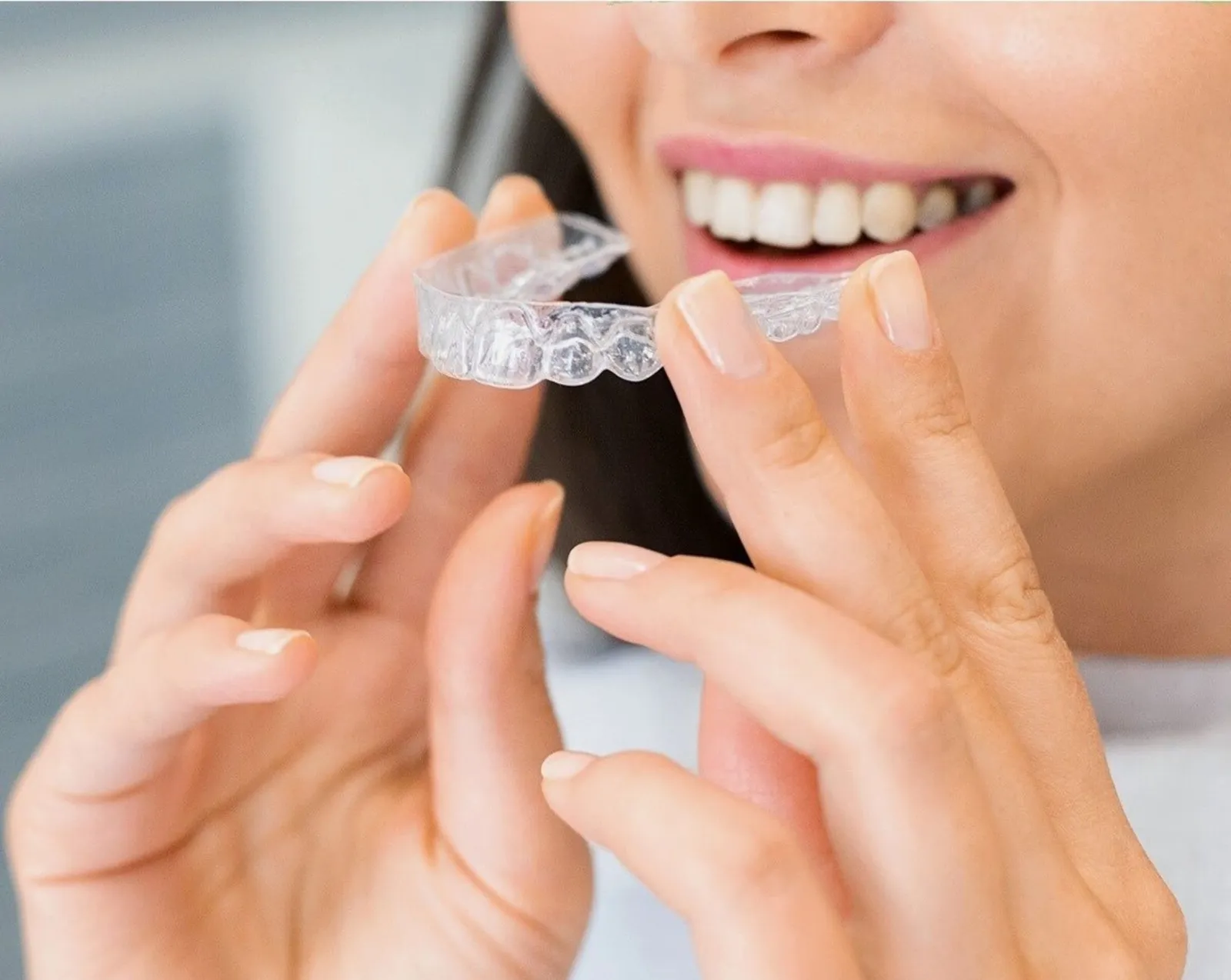
How Much Do Clear Aligners Cost? What Moves the Price
An aligner quote is a sum of parts: how far your teeth move, how many trays and refinements that takes, the records, the retainers, and what your plan pays. Here is what each part does.
Read more
It Has Been Years Since Your Last Dental Visit
If fear is what kept you away, that is the most useful thing you can tell us when you book. It changes the appointment, and there are real options beyond being told to relax.
Read more