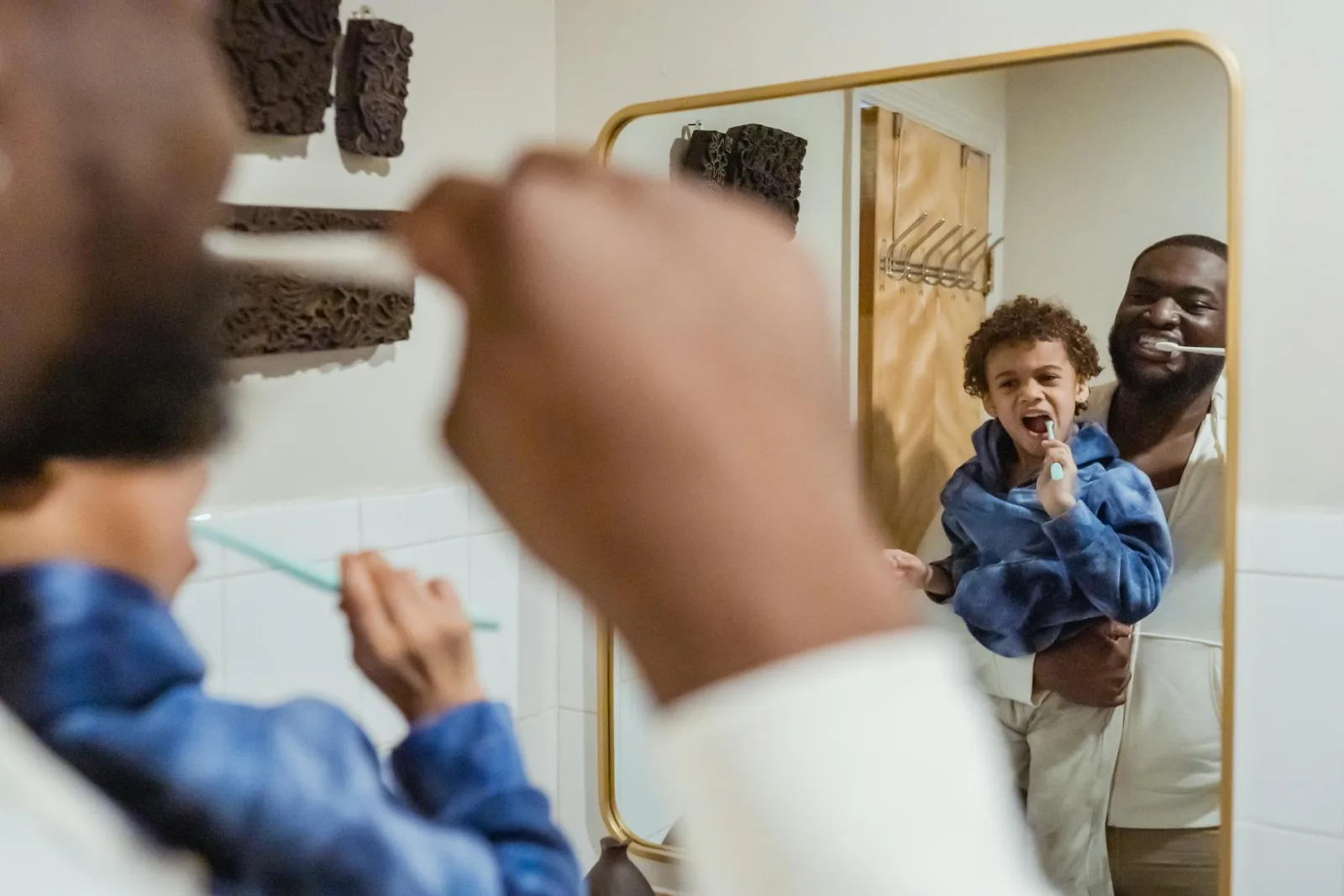
Patients ask this constantly, usually in a tone suggesting they expect to be sold something.
So here is the straight answer first. Electric brushes do remove more plaque than manual ones, and the difference is real but modest. Reviews of the trial evidence put the reduction in plaque and gum inflammation somewhere in the region of one fifth over a few months, with oscillating-rotating heads performing best.
That is worth having. It is also considerably smaller than the difference between good and poor technique with either brush. Which means the more useful question is not which brush, but what you are doing wrong with the one you own.
What brushing is actually removing
Worth being precise, because it explains why technique beats hardware.
Plaque is a biofilm, not food debris. It is a structured community of bacteria in a sticky matrix they build themselves, and it adheres to the tooth surface. Rinsing does not shift it. Neither does mouthwash, not properly, because the matrix protects the bacteria inside it.
Biofilm has to be physically disrupted. That is the whole job of a toothbrush.
Two consequences follow.
Time matters, because disruption is mechanical. The bristles have to physically contact every surface. Most people brush for around 45 seconds while believing they brush for two minutes. That gap is larger than any difference between brush types, and it is the main reason built-in timers help.
The target is the gumline. Plaque causing gum disease sits where tooth meets gum, in the shallow groove there. Bristles need to be angled into that junction at about 45 degrees, not scrubbed flat across the middle of the tooth where nothing much is happening.
The mistake that does actual damage
Pressure.
Brushing harder does not remove more biofilm. Plaque is soft and comes off with light contact. What extra pressure does is wear the tooth and traumatise the gum.
Two visible consequences show up over years:
Gum recession. Repeated mechanical trauma makes gum tissue retreat, exposing root surface. Root surface is not enamel; it is dentine under a thin layer of cementum, and it dissolves in milder acid than enamel does. So the surface exposed by hard brushing is more vulnerable to decay than the surface being protected, and it is why sensitivity so often follows.
Notching at the gumline. Wedge-shaped grooves worn into the tooth where it narrows.
This is where electric brushes have their most underrated advantage. Most have a pressure sensor. For a habitual hard brusher, that feedback is worth more than the plaque-removal statistic.
And this is why hard-bristled brushes should not be bought. Soft is correct. Medium is a compromise nobody needs.
Who benefits most from powered brushing
The average is an average. Some people gain considerably more:
- Anyone with reduced dexterity, such as arthritis, tremor, or recovery from a stroke. The brush does the movement, which changes the outcome rather than improving it slightly.
- Habitual hard brushers, for the pressure sensor.
- People who brush too briefly, for the timer.
- Anyone in orthodontic treatment, or with bridges and implants, where there is more to clean around.
- Children, mostly because they are more likely to keep going for the full two minutes.
If none of those apply and you brush carefully for two minutes with a soft manual brush, you are doing fine. You do not need to be upgraded.
The thing no brush does
Neither type cleans between your teeth. Bristles do not reach the surfaces where teeth touch, and those surfaces are where a large share of decay begins.
If you are choosing where to spend effort, cleaning between your teeth once a day gains you more than any brush upgrade. Floss, interdental brushes, or a water flosser all work. The best one is the one you will actually use, and interdental brushes tend to win on effectiveness where the gaps are big enough for them.
The short version
Soft bristles. Two minutes. Light pressure. Angled at the gumline. Twice a day. Clean between your teeth once. Do not rinse after brushing, so the fluoride stays where you put it.
Get an electric brush if you have a reason from the list above, or if the timer and pressure sensor will change what you actually do. Otherwise the brush is not your limiting factor.
More about what a routine exam and hygiene visit covers.
What to do
At your next visit, ask us to point out where you are missing. There is almost always a pattern, and it is usually the same two or three spots.
That takes a minute, it is specific to your mouth, and it will improve your brushing more than any purchase.
Ready to get started? Schedule a visit with Advanced Dental Care of Stafford.
More from Our Blog

Snap-In Dentures or Fixed All-on-4: How to Choose
A snap-in denture clips onto implants and comes out at night, and your gums still carry part of each bite. A fixed All-on-4 arch stays in and rests entirely on its implants.
Read more
What Is a Full-Mouth Restoration? It Isn't Always Implants
A full-mouth restoration does not always mean implants. When your own teeth are worn or broken but their roots are sound, they can be rebuilt with bonding, onlays and crowns, planned around your bite.
Read more
Are Silver Fillings Safe, and Should You Have Them Replaced?
For most people, a silver filling in good condition is better left in place. The FDA advises against removing intact ones, because drilling them out raises mercury exposure for a while and costs healthy tooth.
Read more