If you have been told a tooth needs to come out, you are probably deciding between two things at once. Where to have it done, and how worried to be.
The useful news is that both questions have the same answer, and it is visible on an x-ray before anyone touches you.
What actually makes an extraction simple or complicated
People assume the deciding factor is how bad the tooth is. It is not. A tooth can be badly decayed and still come out easily, and a healthy tooth can be genuinely difficult.
What matters is the shape and position of the roots, and what sits next to them.
A tooth is held in a socket by the periodontal ligament. Removing it is not a matter of pulling. It is a matter of expanding the socket slightly and easing the root along the path it can travel. When the root is a smooth single cone, that path is straightforward and the tooth comes out in one piece.
Complications come from four things, and every one of them is on the image:
Multiple divergent roots. Molars have two or three roots, and if they splay outward the tooth cannot travel in any single direction. It is often sectioned into pieces first, and each root removed along its own path. That sounds worse than it is, and it is usually gentler than forcing the whole tooth.
Curved or hooked roots. A root with a hook at the tip has no straight exit.
Dense bone. Bone density varies between people and between sites. The lower jaw is denser than the upper.
What is nearby. This is the one that most often prompts a referral.
The two structures that decide a referral
The inferior alveolar nerve. This runs through a canal in the lower jaw and supplies feeling to your lower lip and chin. On a lower molar, particularly a wisdom tooth, the roots can sit directly against that canal, and occasionally wrap around it. Damage to that nerve causes numbness of the lip and chin, which is usually temporary and occasionally is not.
When the x-ray suggests the roots are close, a 3D scan may be taken to see the true relationship rather than a flat shadow. If the roots genuinely involve the canal, that is a case for a surgeon, and it is the single most common reason we refer.
The maxillary sinus. Upper molar roots can sit against the sinus floor, and sometimes project into it. Removing one can leave a communication between mouth and sinus that needs managing.
What we handle here
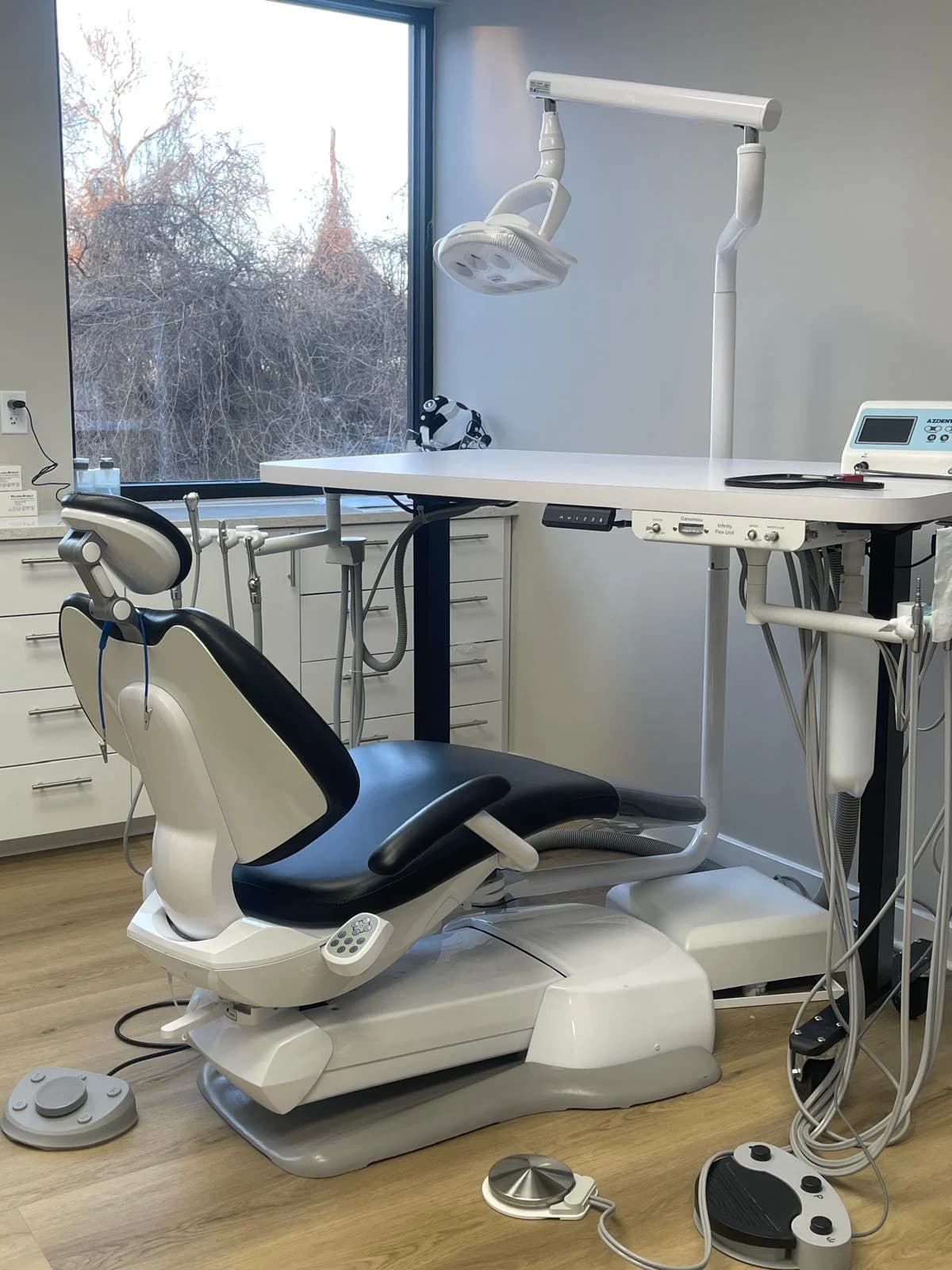
Advanced Dental Care of Stafford performs most extractions in house, including many surgical ones. Straightforward teeth, broken-down teeth, most wisdom teeth, and teeth that need sectioning are all routine general practice.
We refer when the anatomy says a specialist gives you a better outcome. If we recommend that, we will show you the image and point out exactly what we are looking at. You should be able to see the reason, not just be told there is one.
If anxiety rather than anatomy is your concern, that is a different conversation and a solvable one. We offer sedation, and an extraction is one of the most reasonable times to use it.
What recovery actually involves
For most people, three to five days of swelling and soreness, managed with ice, rest and over-the-counter pain relief.
The instruction that matters most is about the clot.
After the tooth comes out, a blood clot forms in the socket. That clot is the scaffold everything else builds on, and it protects the exposed bone underneath. If it is dislodged, the bone is left bare, which is intensely painful and is called dry socket.
Three things dislodge it, and all three are avoidable:
- Suction. No straws, no smoking, no vigorous spitting for the first few days. The negative pressure lifts the clot straight out.
- Forceful rinsing. Gentle salt-water rinsing after the first day is fine. Swishing hard is not.
- Poking it. Leave the site alone, including with your tongue.
Dry socket typically announces itself around day three, as pain that was improving and then sharply worsens, often radiating toward the ear. It is treatable, and it is far better prevented.
More on our general dentistry services.
What to do
Ask to see the x-ray and ask two questions: what shape are the roots, and how close are they to the nerve.
The answers tell you whether this is a routine appointment or a referral, and they will also tell you how worried to be, which is usually less than you currently are.
Ready to get started? Schedule a visit with Advanced Dental Care of Stafford.
More from Our Blog
What Is a Full-Mouth Restoration? It Isn't Always Implants
A full-mouth restoration does not always mean implants. When your own teeth are worn or broken but their roots are sound, they can be rebuilt with bonding, onlays and crowns, planned around your bite.
Read more
Are Silver Fillings Safe, and Should You Have Them Replaced?
For most people, a silver filling in good condition is better left in place. The FDA advises against removing intact ones, because drilling them out raises mercury exposure for a while and costs healthy tooth.
Read more
A Black Spot on Your Tooth: Stain, Cavity, or Something Else?
A black spot on a tooth can be stain, tartar, an old filling, decay that has stopped, or a cavity that is still growing. Color is the weakest clue, so hardness, change over time and an X-ray tell them apart.
Read more