You may have seen oil pulling on a friend's feed or on a wellness shelf. You put a spoonful of coconut oil in your mouth, swish it around for several minutes, and then spit it out. People say it whitens teeth, freshens breath and pulls toxins out of the body.
If you already do it, you have not done anything wrong, so the useful question is a narrower one. What does oil pulling for teeth actually do, and can it stand in for brushing? The short answer is a modest effect in short studies, and no to the second part.
Does oil pulling for teeth really work?
The studies are small and short. Mostly they count two things a dentist can score: how much plaque sits on the teeth, and how red and puffy the gums look.
A 2024 review by Jong and colleagues in the International Journal of Dental Hygiene (2024), pooled 25 trials with 1,184 people. The trials ran for 7 to 45 days, and half of them used sesame oil rather than coconut. More than half enrolled people with no reported dental problems at all. When the reviewers compared the results, three findings stood out:
- Against chlorhexidine, a prescription antiseptic rinse that many of these trials used for comparison, chlorhexidine reduced plaque more than oil did.
- Against ordinary mouthwashes, the people who swished oil ended up with better gum scores.
- The authors rated the certainty of the evidence as very low, which means a future trial could easily change the picture.
A review limited to coconut oil found even less to go on. Woolley and colleagues in Heliyon (2020) found only four usable trials, with 182 people, lasting 7 to 14 days. They judged the risk of bias high. One reason they gave is that coconut oil has a distinct taste, color and feel. That makes it hard to hide which rinse each person got.
Neither review looked at toxins in any form. The trials scored plaque, gum redness and bacteria counts over a few weeks.
Why would swishing oil reduce plaque at all?
Plaque is a soft, sticky film of bacteria that grows on your teeth every day. The bacteria build the film themselves and it clings to the tooth, but anything that pushes and churns against it will loosen some of it.
That is what oil pulling does mechanically. You force a liquid back and forth between your teeth for several minutes. Some of the soft plaque comes loose and leaves with the oil when you spit.
Neither review set out to test why the oil had any effect. The plainest explanation is the one above: the effect comes from the swishing, not from anything special about the oil. It would also explain why chlorhexidine, a rinse built to kill bacteria, did better on plaque than oil did.
Can oil pulling remove tartar, reverse a cavity or treat gum disease?
No to all three, and these three matter more to your teeth than a plaque score over a few weeks.
It cannot remove tartar. Plaque left on a tooth soaks up minerals from your saliva, and if it stays put it hardens. That hard layer is tartar, a crust bonded to the tooth near the gumline.
Tartar does not dissolve in oil and it does not rinse off, so only instruments at a cleaning remove it. That is one reason the exam and cleaning visit exists at all.
It cannot reverse a cavity. Acid from plaque bacteria dissolves minerals out of enamel, and early on that weak spot can take minerals back, with fluoride helping it along. Our post on what fluoride actually does to a tooth explains that step.
Once the surface breaks through into a hole, though, that part of the tooth is gone for good. No rinse rebuilds it, and a hole needs a filling.
It cannot treat gum disease. Gingivitis is the early stage, where the gums turn red and bleed while the bone underneath stays intact. Periodontitis is the later stage, where the infection has moved below the gumline into pockets and the bone holding the tooth starts to shrink.
A liquid swishing around your mouth does not clean the bottom of a deep pocket. That takes a deep cleaning, which our post on deep cleaning versus regular cleaning walks through step by step.
Can oil pulling replace brushing?
No, and the American Dental Association is direct about the evidence on its patient site. It says "there are no reliable scientific studies to show that oil pulling reduces cavities, whitens teeth or improves oral health and well-being". The same page says the ADA does not recommend oil pulling as a dental hygiene practice.
Brushing does two jobs that a mouthful of oil cannot do. The bristles scrub plaque off the tooth and along the gumline, where gum disease starts. Meanwhile the toothpaste leaves fluoride on the enamel, which helps early weak spots take minerals back.
The surfaces where two teeth touch need a tool of their own, because a liquid flows past them without scrubbing them. Floss or small brushes made for the gaps do that part. Our post on electric versus manual toothbrushes covers how to do both well.
So the real risk in oil pulling is substitution. Someone swishes oil for a long stretch, feels clean, and skips the two minutes of brushing that would have done more. Or their gums look a little calmer, so they put off a checkup while tartar keeps building under the gumline.
If you like oil pulling, how do you keep it from doing harm?
It is your call, and keeping it up is a fair choice. Just keep it on top of the basics, never in place of them. The first two are what the ADA recommends on the same page:
- Brush twice a day for two minutes with a fluoride toothpaste.
- Clean between your teeth once every day.
- Keep your regular checkups and cleanings on the calendar.
Spit the used oil into the trash rather than the sink, because coconut oil turns solid as it cools and can clog a drain.
What to mention at your next visit
Tell us if you oil pull, and we will not lecture you about it. Knowing helps us read what we see in your mouth. It also lets us point out where plaque still collects after you brush.
If your gums bleed when you brush, or it has been a while since your last cleaning, start there. Call Advanced Dental Care of Stafford at (540) 288-2800 or send us a message, and we will walk you through it.
More from Our Blog
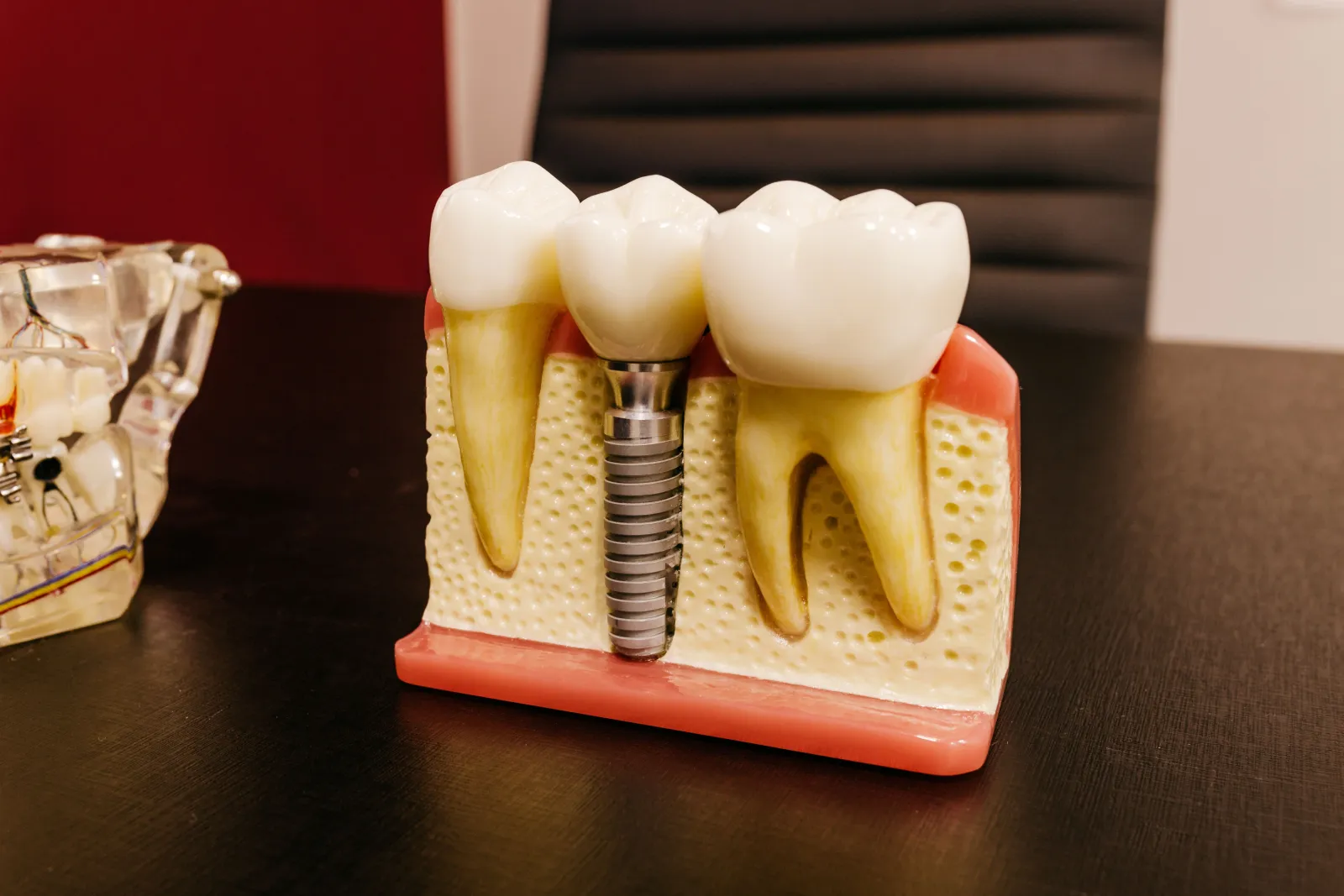
How to Choose a Dentist for Your Dental Implant: Questions Worth Asking
Implant dentistry is not a recognized dental specialty, so a title tells you less than the answers to a few questions. Ask about training, who places the implant and who makes the tooth, how the case is planned, and what happens if it fails.
Read more
Snap-In Dentures or Fixed All-on-4: How to Choose
A snap-in denture clips onto implants and comes out at night, and your gums still carry part of each bite. A fixed All-on-4 arch stays in and rests entirely on its implants.
Read more
What Is a Full-Mouth Restoration? It Isn't Always Implants
A full-mouth restoration does not always mean implants. When your own teeth are worn or broken but their roots are sound, they can be rebuilt with bonding, onlays and crowns, planned around your bite.
Read more